 Midmo Lights
Engineering Focus: Featured Solar Lighting Innovations for Gitarama
Our lead product catalog features architectural integration compatibility, robust high-efficiency solar modules, and smart charge-controller logic designed to withstand sub-equatorial climatic patterns.
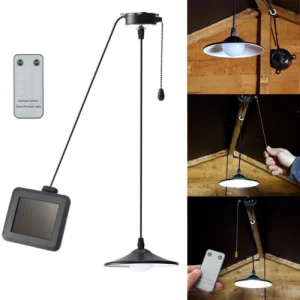
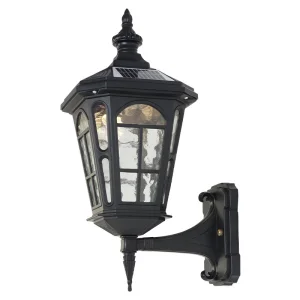
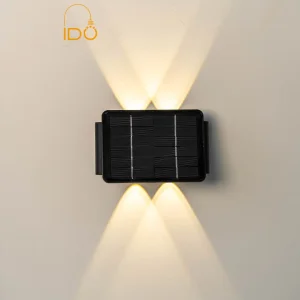
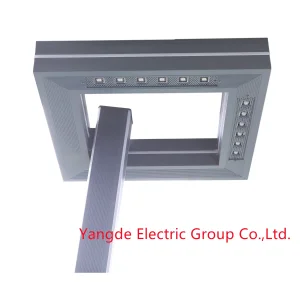
Gitarama's Commercial Transition: A Case for Solar Infrastructure
Gitarama, historically recognized as Rwanda’s secondary logistical axis and the heart of the Muhanga district, is undergoing rapid urban expansion. This demographic and commercial shift has driven local developers, municipal authorities, and facility managers to seek alternatives to volatile grid infrastructure. With electricity costs fluctuating and expansion costs for traditional grid cabling rising, localized solar wall lighting has transitioned from an environmental luxury to an economic necessity.
From commercial plazas along major transit corridors to new residential zones and warehousing hubs, outdoor security lights demand high reliability. Standard grid-tied perimeter lighting faces regular outages and requires expensive installation processes, including trenching and wiring. In contrast, modern solar wall luminaires bypass these architectural challenges entirely, delivering predictable performance from the moment of physical mounting.
Solar Irradiation Optimization in Muhanga District
Gitarama is positioned near the equator, yielding consistent solar irradiance throughout the year. However, high precipitation during the rainy season and humidity require engineering adjustments. High-efficiency monocrystalline PV arrays combined with intelligent MPPT (Maximum Power Point Tracking) controllers ensure that even partial daily sunshine charges the internal LiFePO4 cells to 100% capacity.
Gitarama Market Drivers
- ✓ Grid Cost Deflection: Solar reduces operating costs for local businesses face high tariff structures.
- ✓ IP65 Wet-Season Durability: Systems designed specifically to survive heavy East African rains.
- ✓ Rapid Spatial Deployment: Zero-trenching enables local developers to meet strict construction schedules.
Global Sourcing Architecture: Mitigating Risk in Solar Procurement
For procurement officers, engineering consultants, and municipal buyers in Gitarama, sourcing industrial-grade solar luminaires requires balancing capital expenditure against long-term maintenance costs. The market is saturated with low-grade consumer products that degrade rapidly under high solar-thermal loads. Understanding the core technical parameters is critical for securing reliable, multi-year operational lifespans.
Low-cost fixtures typically use standard Lithium-ion or Lead-acid chemistries, which experience thermal degradation when ambient temperatures elevate. Our commercial lines employ Lithium Iron Phosphate (LiFePO4) battery packs. These batteries maintain operational stability up to 60°C and support over 3,000 full charge-discharge cycles while retaining 80% of their original capacity, preventing premature systemic failure.
Rather than continuous operation at full output—which quickly drains battery stores—commercial configurations utilize adaptive dimming. These systems run at 30% standby illumination and ramp up to 100% output upon detection of pedestrian or vehicular movement. This approach balances battery life with security, extending autonomy during periods of continuous rainfall.
External housings must withstand high UV exposure without embrittlement. Standard ABS plastic housings yellow and crack within 18 months under tropical sunlight. Our professional products feature marine-grade anodized aluminum (6063-T5) or UV-stabilized polycarbonate, ensuring structural integrity and proper heat dissipation for the LED array.
China Factory 4.0: Scalability, Precision, and Logistics Integration
Our manufacturing complex uses Industry 4.0 design standards to deliver consistent quality at scale. By combining automated Surface Mount Technology (SMT) for driver assembly with automated testing, we minimize physical point-of-failure issues. For Gitarama importers, developers, and municipal distributors, this translates into consistent color rendering (CRI > 80), reliable luminous flux, and zero out-of-box failures.
| Manufacturing Stage | Quality Control Protocol | Impact on Gitarama Operations |
|---|---|---|
| Battery Cell Matching | Internal resistance and capacity grading using high-precision automated cyclers. | Eliminates premature battery failure, ensuring a product lifespan of over 5 years. |
| SMT Placement | Automated Optical Inspection (AOI) to check all driver board solder points. | Prevents open circuits caused by transit vibrations along transport corridors. |
| Ingress Testing | Submersion and high-pressure water spray testing matching IP65/IP66 standards. | Guarantees complete weatherproofing during intense sub-equatorial rainstorms. |
| Spectroradiometry | Integrating sphere testing for color temperature and lumen verification. | Ensures illumination levels match municipal safety specifications. |
Additionally, our supply chain coordination secures stable pricing for raw materials (such as high-grade copper, monocrystalline silicon, and aluminum alloys). This allows us to offer competitive pricing for container-load shipments to East African ports, with logistics support managing transport from Mombasa or Dar es Salaam directly to Gitarama.
Factory Tour & Engineering Operations
Take a look inside our manufacturing facility to see our automated production processes and quality control stages.
Procurement & Technical FAQ for Gitarama Buyers
Our fixtures are equipped with high-efficiency monocrystalline solar panels and large-capacity LiFePO4 batteries. Integrated smart power management systems dynamically adjust light output based on battery charge state, allowing the lights to operate for up to 3-5 consecutive overcast days.
We use premium LiFePO4 cells, which perform reliably at temperatures up to 60°C without the venting risk associated with standard Lithium-ion batteries. These cells are rated for over 3,000 complete charge-discharge cycles, corresponding to a service life of approximately 8 to 10 years.
We provide full customization options for commercial projects, including custom motion sensor timing, specific color temperatures (from warm 3000K to cool 6500K), custom mounting fixtures, and branded housings for local distribution.
Most orders ship via container to the ports of Mombasa (Kenya) or Dar es Salaam (Tanzania), followed by land transport along the Northern or Central Corridors to Gitarama. Production typically takes 20-30 days, and ocean transport requires an additional 30-40 days.
Complete Product Range & Specifications for Gitarama Sourcing
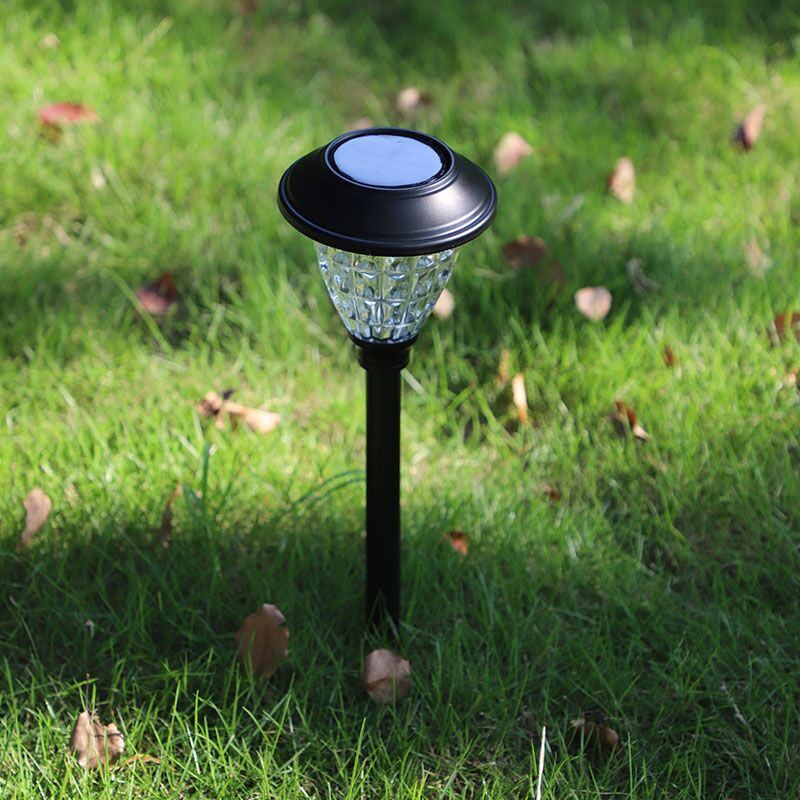
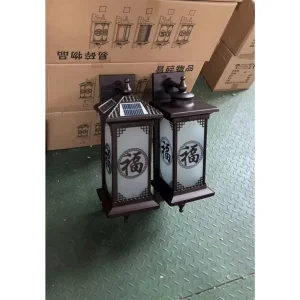
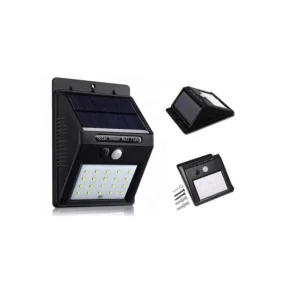
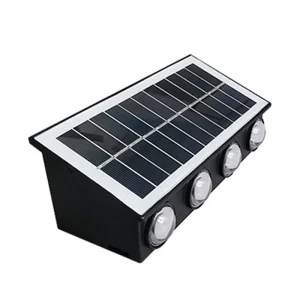
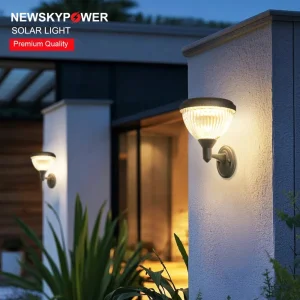
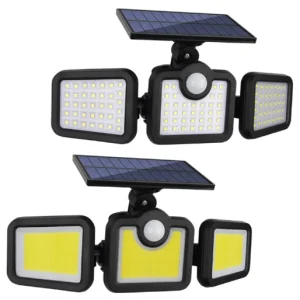
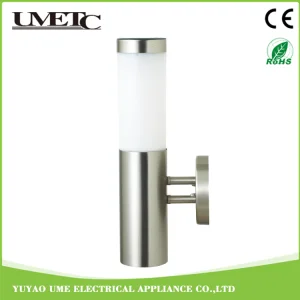
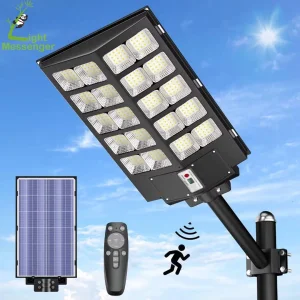
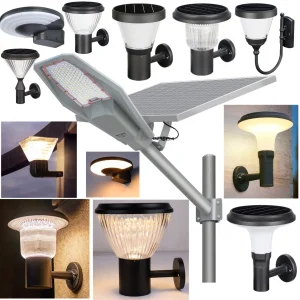
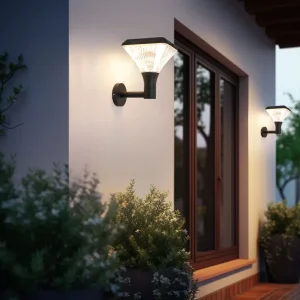
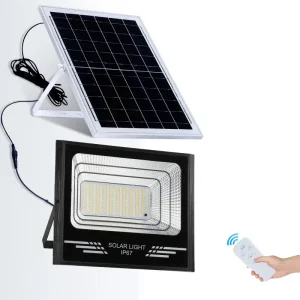
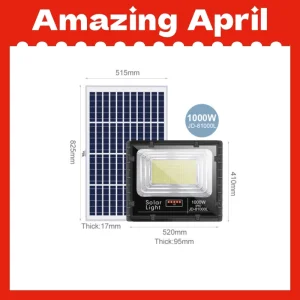
Select from our full catalog of solar wall luminaires, ranging from heavy-duty security floodlights to decorative pathway fixtures.
About Us
We began to develop solar lights in 2006, and never stop our step to find new tech and fashionable design of it. Due to our lasting developing and marketing promotion, solar lights have successfully replace thousands of inefficient electrical and gas powered post or wall lights.
Solar lights are electric lights that are converted into solar energy by solar panels. During the day, even on a cloudy day, this solar generator (solar panel) can also collect and store solar energy. As a safe and environmentally friendly new light, solar lights have received increasing attention.
Start Your Commercial Solar Sourcing Partnership
Contact our engineering team today to request complete photometrical (IES) files, custom configuration pricing, or support with shipping logistics to Gitarama and the wider East African region.
Send Inquiry Now