 Midmo Lights
Featured Solar Motion Lights for Equatorial Guinea Projects
Engineered for extreme coastal humidity and intense equatorial solar exposure. Browse our primary street and perimeter lighting models.
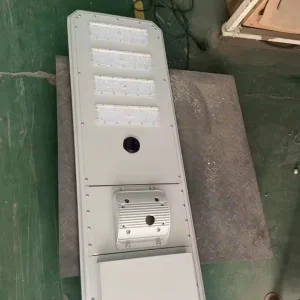
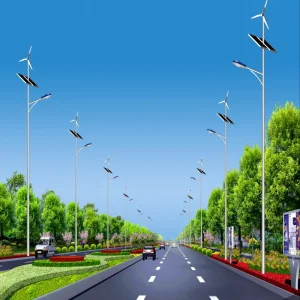
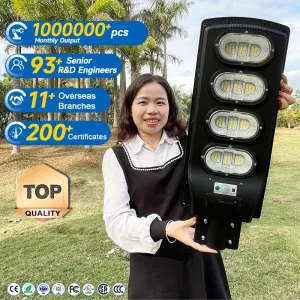
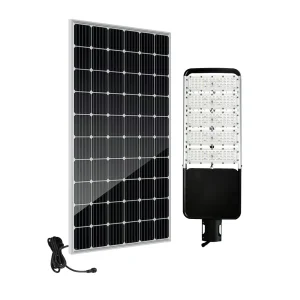
Equatorial Guinea's Energy Evolution & Solar Feasibility
Equatorial Guinea, located within the equatorial belt of Central Africa, faces a unique combination of high humidity, frequent cloud cover, and localized infrastructure challenges. The nation’s strategic developmental roadmap, including the Horizon 2035 Plan, heavily emphasizes transition away from fossil-fuel reliance toward sustainable municipal grids. Decentralized smart public solar lighting represents a primary component of this green evolution.
Because the region experiences a tropical monsoon climate—marked by two wet seasons and consistent cloud cover—traditional "constant-on" solar fixtures fail to provide uninterrupted operation throughout the night. Here is where the application of **solar motion sensor lights** becomes critical. By integrating advanced Passive Infrared (PIR) and Microwave Radar detection, these smart systems optimize battery reserves, operating at a dim energy-saving level until human or vehicle movement is detected.
"For Equatorial Guinea's municipal and commercial projects in Malabo and Bata, relying on standard static solar panels is not sufficient. Smart motion sensors ensure up to 7 days of autonomy during intense monsoon rainy seasons by limiting peak discharge events."
Scientific Optimization: PIR vs. Microwave Radar Sensors
Understanding the sensor tech required to withstand Equatorial Guinea’s high ambient temperature (averaging 26°C - 30°C) and high humidity index.
Passive Infrared (PIR)
PIR sensors function by detecting changes in infrared thermal radiation emitted by human bodies or vehicles. In cooler climates, this difference is distinct. However, in Equatorial Guinea's humid heat, our customized PIR lenses use multi-point sensitivity settings to distinguish human movement from high ambient environmental temperatures.
Microwave Radar Sensors
Emitting high-frequency electromagnetic waves, microwave sensors analyze the frequency shift of the reflected wave (Doppler Effect). It penetrates rain, mist, and dust easily, providing a wide detection angle up to 360° and distances up to 12-15 meters. Recommended for Bata coastal highways.
Intelligent Controller Integration
Our MPPT (Maximum Power Point Tracking) smart controllers adjust solar charging and LED discharge curves depending on real-time solar irradiation and state-of-charge. The dimming program dynamically shifts output power between 10% to 100% based on trigger frequency.
Climatic Adaptability Matrix for Equatorial Guinea Provinces
| Province / Location | Climate Characteristics | Recommended Solar System Architecture | Optimum Ingress Protection (IP) |
|---|---|---|---|
| Bioko Norte (Malabo) | Maritime Tropical, High Salt Mist, Strong Winds | Monocrystalline solar panel + Integrated IP66 Aluminum Housing + anti-corrosion coating + Remote-controlled All-in-One. | IP66 / IP67 |
| Litoral (Bata, Kogo) | High Rainfall, Atlantic Coast Salt Spray, High Humidity | All-in-Two/Split Configuration with separate solar panel tilted at 8° north/south + Marine-grade waterproof connectors. | IP66 |
| Wele-Nzas (Oyala / Djibloho) | Interior Equatorial Forest, Mist Cover, Lower Wind Speeds | Ultra-High Brightness 200lm/W system with High-capacity LiFePO4 batteries + intelligent Microwave motion sensor. | IP65 |
| Annobón Province | Isolated Island, Extreme Coastal Salinity, Constant Sun | Robust Monocrystalline solar panels + MPPT controller + marine grade powder coating to resist salt oxidation. | IP67 |
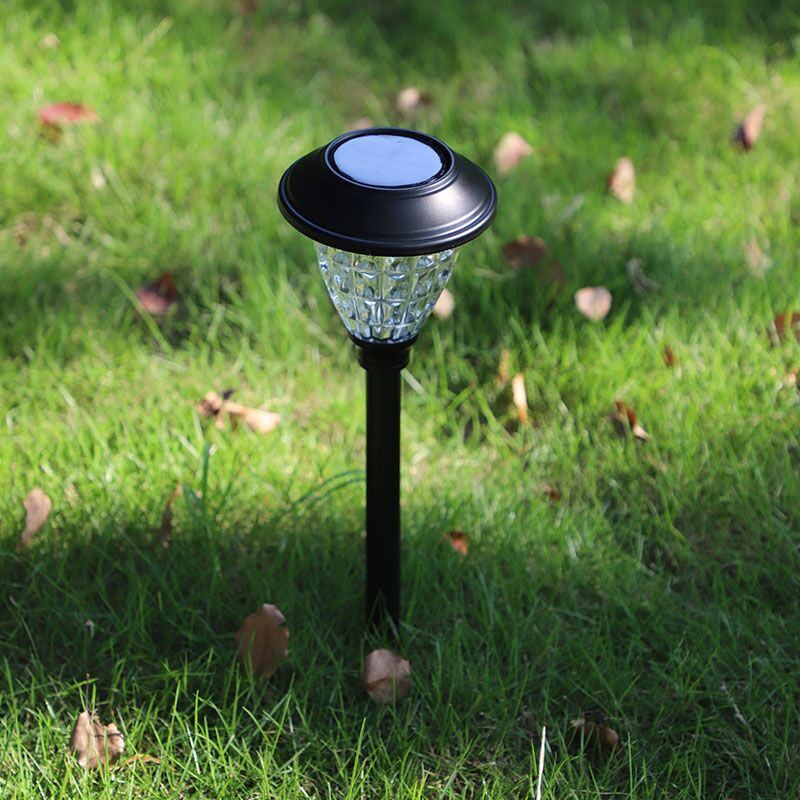
China Solar Lights Manufacturers, Suppliers, Factory
We began to develop solar lights in 2006, and never stop our step to find new tech and fashionable design of it. Due to our lasting developing and marketing promotion, solar lights have successfully replace thousands of inefficient electrical and gas powered post or wall lights.
Solar lights are electric lights that are converted into solar energy by solar panels. During the day, even on a cloudy day, this solar generator (solar panel) can also collect and store solar energy. As a safe and environmentally friendly new light, solar lights have received increasing attention.
As a leading Chinese supplier and exporter, we focus on engineering robust solutions for the African market. We combine high-discharge LiFePO4 lithium batteries, premium monocrystalline panels, and micro-controller software designed to endure the extreme rain patterns of the Gulf of Guinea.
Learn More About Our FactoryTechnical Specifications for Equatorial Guinea Infrastructure Procurement
When selecting solar lighting for major government contracts and private commercial developments in Malabo, Bata, or Luba, engineers must consider materials that can withstand high UV levels, torrential rain, and salty air. Below, we examine the structural and component standards of our motion-sensor lighting series.
1. LiFePO4 Battery Systems vs. Standard Lithium (NMC/Cobalt)
Standard lithium-ion batteries fail rapidly under Equatorial Guinea’s high temperature cycles. We use exclusively **Lithium Iron Phosphate (LiFePO4)** battery cells. LiFePO4 cells are thermally stable up to 60°C without risk of combustion and maintain over 2000-3000 charge cycles at 80% Depth of Discharge (DoD). This guarantees a product lifespan exceeding 8 years under persistent daily cycling.
2. High-Efficiency Monocrystalline Silicon Photovoltaic Panels
Given the frequent overcast skies in the Gulf of Guinea, solar conversion efficiency is paramount. Our panels feature high-purity monocrystalline silicon cells with conversion efficiencies up to 21.5% to 23%. Under diffuse light (cloudy and rainy conditions), these panels can still generate energy, assuring stable power flow to the controller.
3. Corrosive Protection & Ingress Protection (IP Rating)
Coastal cities like Bata and Malabo experience continuous salt-spray winds. If casing metal is not adequately protected, rust will compromise seals within 12 months. Our outdoor solar streetlights feature:
- High-pressure die-cast aluminum housings with anti-saline powder coating.
- 304/316 grade stainless steel screws and brackets.
- UV-stabilized optical polycarbonate lenses that will not yellow or turn brittle under harsh equatorial sunshine.
Note on Installation: Installers in Equatorial Guinea are advised to clear vegetation regularly and clean solar surfaces after the Harmattan season, when dust blown from the Sahara can accumulate on PV glass surfaces, reducing charging efficiency by up to 25%.
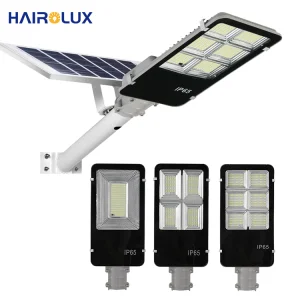
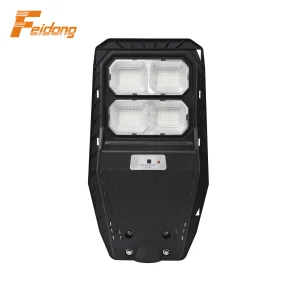
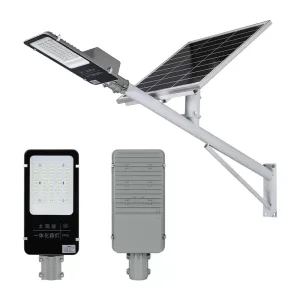
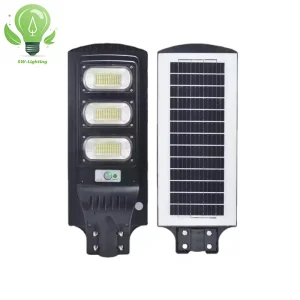
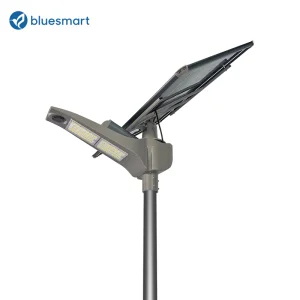
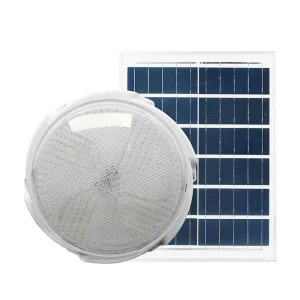
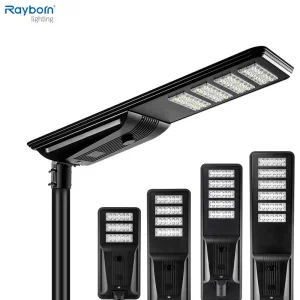
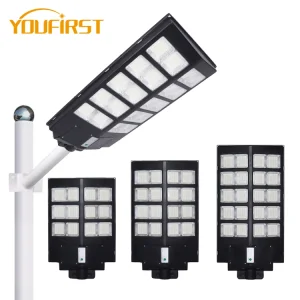
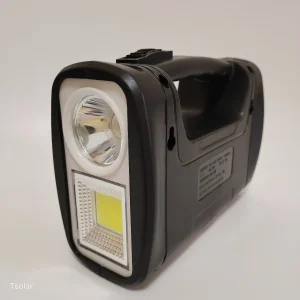
Commercial Catalog: High-Efficacy Motion Sensor Systems
Selected commercial and residential solar lighting solutions optimized for Equatorial Guinea's import requirements.
China Supply Chain Resiliency & Logistics Optimization to Equatorial Guinea
As a global OEM/ODM manufacturer established in 2006, we manage the entire manufacturing cycle. This comprehensive oversight ensures that every solar street light, controller, and LiFePO4 battery pack meets exact technical specifications before leaving our warehouse.
Our supply chain resilience is built upon the following elements:
- Integrated Material Sourcing: By collaborating directly with Grade-A cell manufacturers (such as CATL and BYD), we obtain high-grade battery cells that deliver extended lifetimes and consistent charge capabilities.
- Automated Precision Assembly: Automated SMT machines mount LED modules to ensure heat dissipation paths are optimized, preventing heat degradation common in tropical climates.
- Strenuous Environmental Testing: All motion-sensor lights go through testing protocols inside environmental simulation chambers: salt-spray chambers to verify maritime protection and thermal chambers mimicking equatorial humidity levels.
- Optimized West African Shipping Routes: We have established relationships with global ocean carriers providing direct freight connections from Ningbo/Shenzhen ports to the Ports of Malabo and Bata. We manage customs clearances, container loads (FCL/LCL), and documentation.
Importer Verification: We supply full certification and documentation necessary for imports into Equatorial Guinea, including CE, RoHS, IEC reports, and SGS/Bureau Veritas inspection files as demanded by local customs officials.
Frequently Asked Questions (FAQ)
Critical insights for procurement officers, engineers, and municipal buyers sourcing solar lights for West African projects.