Midmo Lights
Commercial Solar Lighting Showcase - Gallery I
Explore our premium architectural, street, and pathway illumination systems designed for municipal, industrial, and high-end residential applications.
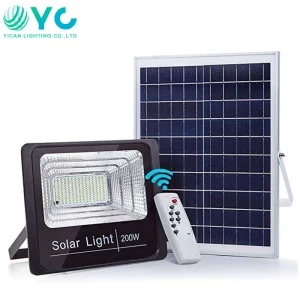
100wat 200W 300W 400W Automatic Portable IP65 Outdoor Best Solar Panel Energy Wall COB Garden Powered Motion Sensor LED Street Road Solar Flood Light
View Specifications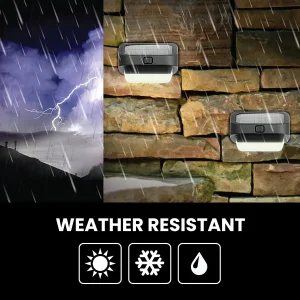
Solar Fence Lights IP65 Waterproof Outdoor Lights Warm White and 10 RGB Color Glow Modes
View Specifications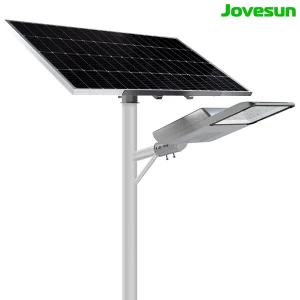
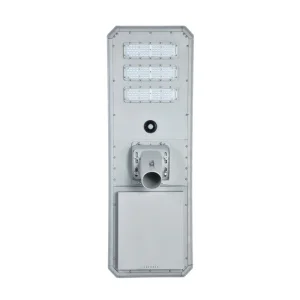
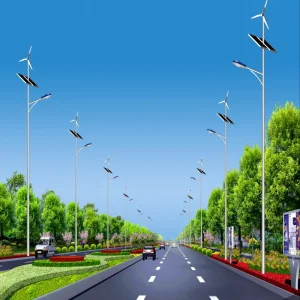
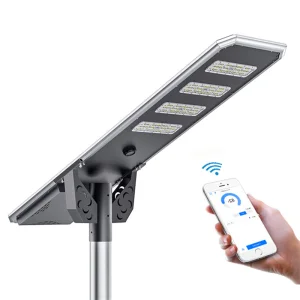
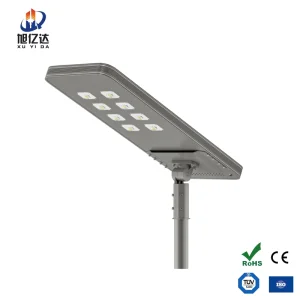
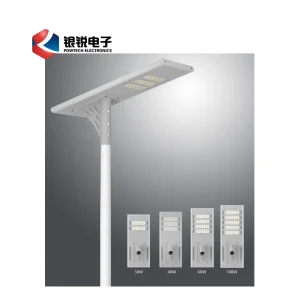
Factory 200lm Efficiency Outdoor Waterproof IP66 60W/80W/100W/120W/150W/200watts Lithium Battery Strong Lumens Split PV Panel Solar Street Light
View Specifications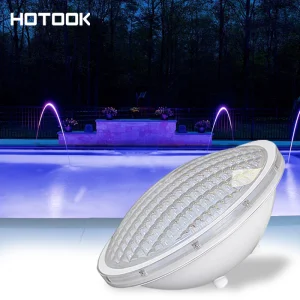
PAR56 Pool Light Replacement Bulb IP68 Underwater Lamp E27 163mm (6.42inch) IP68 AC/DC 12V/24V RGBW RGB LED Solar Swimming Pool Lights
View Specifications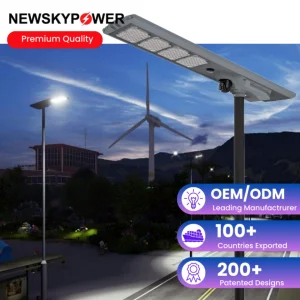
Corporate Profile & Technological Legacy Since 2006
We began to develop solar lights in 2006, and never stop our step to find new tech and fashionable design of it. Due to our lasting developing and marketing promotion, solar lights have successfully replace thousands of inefficient electrical and gas powered post or wall lights.
As a pioneer among China Solar Lights Manufacturers, Suppliers, and Factories, we operate with a clear mission: to engineered robust photoluminescent systems that deliver stable grid-independent power under the most demanding outdoor conditions. Solar lights are electric lights that are converted into solar energy by solar panels. During the day, even on a cloudy day, this solar generator (solar panel) can also collect and store solar energy. As a safe and environmentally friendly new light, solar lights have received increasing attention.
Over nearly two decades, we have scaled our production facilities to incorporate vertically integrated manufacturing processes, ensuring that from wafer sorting to the final IP66 testing chamber, each luminaire adheres to strict international testing protocols. Our dedication has transformed us from a regional assembly plant into a globally trusted B2B partner.
Factory Tour: Inside our ISO9001 and BSCI Certified Automated Assembly Line.
18+
Years of R&D Experience
120+
Exporting Countries
210 Lm/W
Max Luminous Efficiency
80,000+
Daily Factory Capacity (Units)
Engineering Principles of Off-Grid Solar Pathway Lighting
A comprehensive architectural breakdown of the components that allow modern commercial-grade solar pathways to run seamlessly, even under persistent overcast conditions.
High-Efficiency Monocrystalline PV Cells
Unlike residential-grade amorphous panels, our industrial pathway lights utilize A-grade monocrystalline silicon wafers with conversion efficiencies exceeding 22.5%. During low-light or heavily overcast conditions, diffuse solar radiation (shortwave light) still excites electrons within the P-N junction. By optimizing the anti-reflective silicon nitride coating, we guarantee charge collection even when the sun is obstructed by thick clouds.
LiFePO4 Energy Storage Technology
Standard lithium-ion or lead-acid batteries fail under extreme temperatures. Our systems use premium Lithium Iron Phosphate (LiFePO4) battery packs managed by complex Battery Management Systems (BMS). Features include active balancing, over-discharge safety cut-offs, and temperature-activated thermal throttling, providing over 3,000 charge cycles (8-10 years lifespan) compared to the 300 cycles of standard Ni-Cd batteries.
Smart MPPT Charge Controllers
Maximum Power Point Tracking (MPPT) microcontrollers actively monitor the voltage output of the solar panel and match it with the battery pack's input requirements. This dynamically updates the impedance of the charging loop, resulting in a 30% increase in charging efficiency compared to traditional Pulse Width Modulation (PWM) controllers, minimizing winter blackout durations.
Global Commercial Landscapes & B2B Procurement
In modern commercial real estate, corporate campuses, municipal parks, and industrial corridors, green building mandates (such as LEED, BREEAM, and DGNB) are reshaping lighting design. Traditional grid-tied pathway installations require heavy trenching, conduit laying, concrete pouring, and high electrician fees. In contrast, commercial-grade solar pathway lights provide zero-grid operating costs and can be installed in minutes with minimal landscape disturbance.
Our B2B clients—ranging from landscape architects and MEP engineers to large-scale infrastructure contractors—benefit from our volume manufacturing capacity. By standardizing component mounting interfaces and utilizing rugged, rust-resistant powder-coated aluminum housings, we provide solutions that satisfy both the aesthetic requirements of high-end resorts and the structural specifications of public roadways.
We work closely with regional distributors to maintain ready-to-ship stock in North America, Europe, and the Middle East, offering custom Correlated Color Temperatures (CCT) ranging from warm amber (2200K) to cool daylight (6500K) to meet localized ecological and architectural requirements.
Market Deployment Portfolio
- Municipal Infrastructure: Standardized IP66/IP67 park pathway lights featuring integrated motion sensors to conserve energy while enhancing public safety.
- Corporate Campuses: Architecturally integrated solar lawn lights featuring smart 4G/LoRa connectivity and security cameras for perimeter monitoring.
- Marine & Coastal Zones: Salt-fog resistant pathway illumination featuring marine-grade structural coatings and IP68 underwater fixtures.
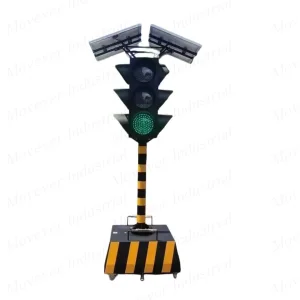
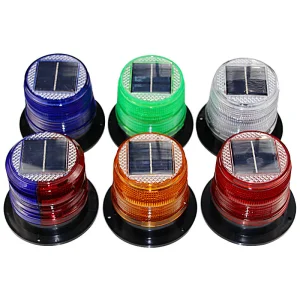
- Remote Transport Links: Magnetic, portable warning systems and smart traffic lights designed for infrastructure maintenance and emergency services.
Localized Application Scenarios & Environmental Engineering
A globally trusted manufacturer must build for environmental extremes. Here is how our engineering accommodates diverse microclimates around the world.
High Latitude & Sub-Zero Winters
Locations: Scandinavia, Northern USA, Canada
Cold temperatures degrade battery capacity and frozen precipitation can block solar arrays. Our sub-zero specific models feature low-temperature LiFePO4 cells with built-in heating elements powered by the charging cycle. The housing designs utilize steep, sloped glass covers that shed snow naturally, ensuring the solar path is clear for daily solar collection.
Arid and Extreme Heat Environments
Locations: GCC Nations, Northern Africa, Western Australia
High temperatures cause thermal runaway in lithium batteries and solar panel efficiency degradation. Our desert models use active thermal separation chambers between the PV panel and battery enclosure, together with high-temperature resistant LiFePO4 cells that function safely up to 65°C without compromising cycle life.
Coastal and High-Salinity Zones
Locations: Florida, Caribbean, Southeast Asia
Salt-spray and high humidity quickly corrode standard powder-coated steel or low-grade aluminum. We construct our marine-grade pathway lights using anodized 6063-T6 aluminum extrusion housings and 316 stainless steel hardware, treated with a double-pass fluorocarbon powder coating that survives a 1,000-hour ASTM B117 salt spray test.
Technology Roadmap & Smart City Integrations (2025 - 2030)
Our commitment to continuous innovation drives our product development pipeline. Here is our technological roadmap for the next generation of solar illumination.
Integrating Bluetooth Mesh and LoRaWAN modules into commercial pathway heads. Lights can now communicate to create visual pathways (e.g., lighting up sequentially as a pedestrian walks by) and report battery health status to central building management systems.
Transitioning high-end lines from silicon monocrystalline to Silicon-Perovskite tandem cells. This upgrade increases theoretical panel efficiency from 22.5% to over 28.5%, allowing smaller luminaire profiles with identical power outputs.
Phasing out liquid electrolyte LiFePO4 batteries in favor of solid-state lithium cells. This eliminates thermal runaway risks completely, extends operational life to 15+ years, and permits efficient charging at temperatures below -20°C.
China Supply Chain Resilience & Cost-to-Quality Optimization
China is the global leader in photovoltaic cell manufacturing, lithium battery refining, and LED semiconductor packaging. Our manufacturing facility in Ningbo leverages this regional cluster to secure premium raw materials at competitive rates.
We maintain direct agreements with tier-1 battery cell providers and silicon wafer cutters. This vertical integration allows us to keep large reserves of raw materials, protecting our international B2B clients from sudden market pricing shifts and logistics interruptions.
Our automated SMD assembly line, coupled with mechanical CNC testing, ensures consistency across high-volume production runs. Every batch undergoes a battery of quality checks, including integrating sphere calibration, vibration analysis, and high-pressure water ingress tests, ensuring zero-defect dispatches to our clients.
Rigorous Factory QA/QC Protocols
- Automatic Aging Test: Every assembled pathway light is subjected to a continuous 72-hour cycle charge-discharge test prior to packaging.
- Salt Spray Exposure Chamber: Materials undergo periodic testing in 5% NaCl solutions to ensure structural longevity in coastal deployments.
- IPX6 & IPX8 Submersion Testing: Simulating hurricane-force rain and complete submersion to verify silicone seals and cable gland performance.
- Spectrophotometer Calibration: Checking chromaticity coordinates, Color Rendering Index (CRI), and luminous flux to maintain architectural lighting standards.
Global Certifications & Localized B2B Support
Compliance is essential for project approvals. Our outdoor solar lighting fixtures carry full certifications to satisfy municipal and regional safety and environmental codes.
Electrical & Safety Compliance
Our products carry UL 8750, CE-EMC, FCC Part 15, and RoHS certifications. Every unit conforms to the Low Voltage Directive, ensuring safe integration into public spaces.
Environmental & Ingress Protection
Certified IP65, IP66, and IP68 enclosures protect against particulate matter and moisture. We also offer Dark Sky compliant optical distributions (BUG Rating: U0) to reduce light pollution.
Localized Engineering Support
Our support teams offer comprehensive engineering and planning documentation, including Dialux photometric simulations, wind-loading certifications, and warranty documentation.
Frequently Asked Questions (FAQ)
Deep technical answers to common queries raised by procurement teams, engineers, and landscape designers.
Commercial Solar Lighting Showcase - Gallery II
Advanced commercial lighting solutions designed for high stability, simplified field installation, and off-grid performance.
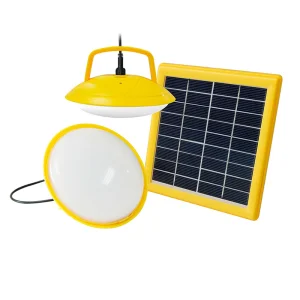
Solar Home Kit for Home Lighting and Mobile Phone Charging and Outdoor Emergency Use.
View Specifications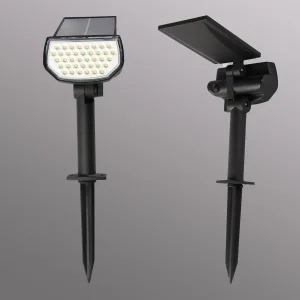
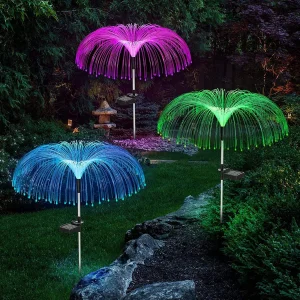
Solar Waterproof Fiber Optic Jellyfish LED Lights Plug-in Lawn Garden Decorative Lights
View Specifications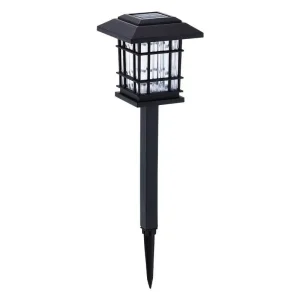
Outdoor Solar LED Ground Plug Lawn Light Waterproof Home Decoration Garden Path Simulated Flame Garden Lamp
View Specifications