 Midmo Lights
Understanding Warm vs Cool White Solar Lights for 2026 Canton Fair?
Understanding solar lights involves grasping the differences between warm and cool white options. What is the difference between warm and cool white solar lights? This question is crucial for consumers and businesses alike, especially as energy-efficient solutions gain popularity. Warm white lights emit a soft, yellowish hue. They create a cozy and inviting atmosphere, perfect for residential settings. Cool white lights, on the other hand, produce a brighter, bluish tone. These lights are often favored for task lighting and outdoor security purposes.
Data shows that the solar lighting market is projected to reach $15.6 billion by 2028, with a significant shift toward smart energy solutions. Many industries, such as hospitality and retail, prioritize efficient lighting. The average consumer is becoming more knowledgeable about the impact of lighting on mood and functionality. This knowledge is vital as exhibitors prepare for the 2026 Canton Fair. The fair emphasizes advanced manufacturing and smart technologies, providing a platform for innovative solar lighting options.
As technology evolves, the introduction of AI in trade shows enhances the purchasing experience. Buyers can filter suppliers based on certifications like ISO and CE, making informed decisions. However, challenges remain in accurately representing light quality. What is the difference between warm and cool white solar lights? Understanding these nuances is key for customers seeking optimal lighting solutions for their spaces.
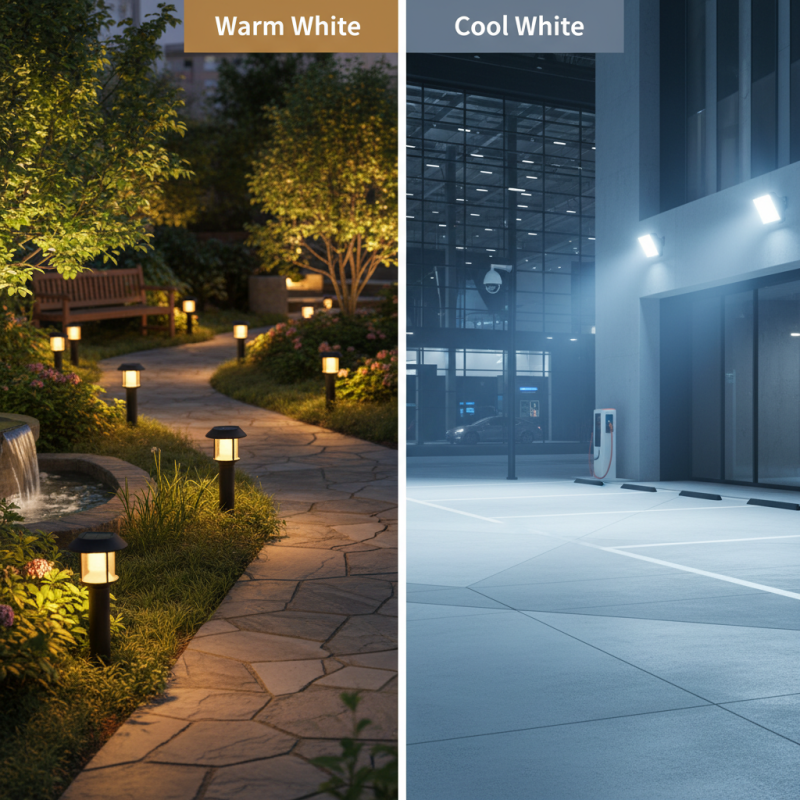
Understanding the Color Temperature in Solar Lights
The color temperature of solar lights plays a crucial role in their effectiveness and aesthetic appeal. Generally, warm white lights have a color temperature of around 2700K to 3000K. This range creates a cozy and inviting ambiance. In contrast, cool white lights typically range from 4000K to 6000K, offering a brighter and more energizing atmosphere. According to a 2022 lighting industry report, 70% of consumers prefer warm white lighting for outdoor spaces.
Tip: Consider the purpose of your space. For relaxation, warm white is ideal. For security and visibility, cool white enhances brightness.
Choosing the right color temperature can also impact energy efficiency. A study by the International Energy Agency found that lights with lower color temperatures can consume less energy while providing sufficient illumination. However, there's a risk. Many might choose warmer tones without considering visibility needs, which can lead to dark spots in your outdoor space. It's essential to balance aesthetics with practicality.
Tip: Test different lights at night to see how they affect your environment. You may realize that what seems appealing in daylight can look different once the sun sets.
FAQS
: Warm white solar lights create a soft glow that enhances aesthetics. They also mimic traditional incandescent bulbs.
These lights are energy-efficient and consume less power. Many options provide over 100 lumens per watt.
Some users feel warm white lights are less bright. This can lead to tension between ambiance and practical needs.
Poor maintenance can shorten the lights' lifespan. Battery quality and solar panel efficiency also play crucial roles.
Reflect on the desired atmosphere. Warm lights relax guests, while cool lights increase energy and visibility.
Battery life is critical, especially for longer events. Some lights may not last the entire night.
Optimal placement enhances visibility and overall appeal. Poor placement can diminish the event’s atmosphere.
Yes, testing can help determine the best fit for your event. Not every choice will be perfect, and that’s okay.
Cloud cover can reduce solar panel efficiency. Be aware that weather variations can affect lighting needs.
Assess your specific requirements and preferences. Consider both functionality and atmosphere to avoid dissatisfaction.
Conclusion
When considering solar lights for events, it's essential to understand the difference between warm and cool white light. Warm white solar lights emit a cozy, amber glow that creates a relaxing atmosphere, making them ideal for intimate gatherings or outdoor dining. In contrast, cool white solar lights provide a brighter, more energizing light that enhances visibility and is suitable for security purposes or larger events.
What is the difference between warm and cool white solar lights? The primary distinction lies in their color temperature, measured in Kelvins. Warm white typically sits around 2700K to 3000K, while cool white ranges from 4000K to 6000K. When choosing solar lights, consider factors like the event's ambiance, lighting requirements, and personal preference to select the ideal option that meets your needs while enhancing the overall experience.
