10 Tips for Storing Solar Lights During Winter

Time:2026-06-04 Author:Ethan
0%

As the winter chill approaches, many homeowners face the challenge of how to store solar lights during winter. Proper storage not only extends the life of these lights but also ensures they remain effective for the next season. According to Dr. Emily Fischer, a leading expert in solar technology, "Protecting your solar lights from harsh winter conditions is key to their longevity."

Storing solar lights correctly involves a few thoughtful steps. Remove them from your outdoor spaces before heavy snowfall or ice storms. Clean each light to prevent dirt accumulation, ensuring they are ready for spring. Consider placing them in a dry, sheltered area, like a garage or shed, to keep them safe from moisture.

It’s easy to overlook these details, yet neglecting them can lead to damage. Remember, even the best solar lights can suffer if not stored properly. By following these tips, you uphold your investment and embrace the beauty of energy-efficient lighting year-round.
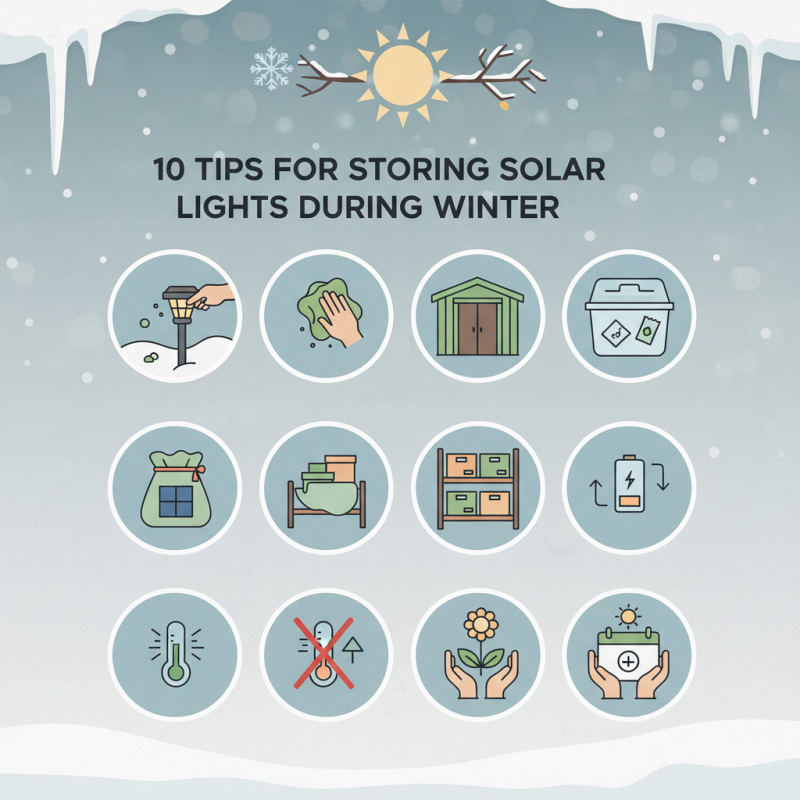
10 Tips for Storing Solar Lights During Winter

Understanding the Importance of Proper Solar Light Storage in Winter

Proper storage of solar lights during winter is crucial for their longevity and performance. Research indicates that inadequate storage can lead to a significant reduction in battery life. According to a report from the Solar Energy Industries Association, efficiently maintained solar products can last up to five years longer than those poorly stored. Temperature fluctuations affect battery chemistry. Storing lights in a cool, dry place protects against freezing temperatures, which can damage batteries.

Neglecting storage can result in faded solar panels and brittle plastic components. Ideally, you should clean the lights before storing them. Residue on solar panels limits their efficiency. Regular maintenance can significantly extend operational life. Interestingly, some users forget the crucial step of removing batteries. Doing so can prevent corrosion and leakage during bitterly cold months. A recent study showed that nearly 30% of solar light failures could be traced back to improper winter storage.

Moreover, the environment plays a role in the lifespan of solar lights. Areas with heavier snowfall or intense winds pose greater risks. Choosing a safe, stable storage area is vital. Reflecting on your storage practices could save you the hassle of replacing lights more frequently. Observing these steps consistently ensures your solar lights remain effective and ready for use come spring.

Assessing Different Types of Solar Lights for Winter Storage Needs

When storing solar lights for winter, it’s crucial to consider the type of solar lights you own. There are various designs available, including garden lights, string lights, and lanterns. Each type has unique needs in terms of care and storage. According to a report from the Solar Energy Industries Association, improper storage can reduce the lifespan of solar lights by up to 50%.

Garden lights, for instance, often have removable batteries. It's advisable to take out these batteries to prevent corrosion. This simple step can significantly extend the life of your lights. String lights, however, should be coiled carefully to avoid kinks. Many users overlook this detail, leading to tangled messes that can be time-consuming to unravel later.

Choosing a suitable storage location is essential, too. A cool, dry place protects the lights from frost and moisture. Data suggests that humidity levels above 70% can diminish solar panel efficiency in prolonged exposure. Reflect on how you previously stored your lights. Was it effective? Taking these factors into account ensures your solar lights come back to life when spring arrives.

Best Practices for Cleaning Solar Lights Before Winter Storage

Cleaning solar lights before winter storage is essential for their longevity. Start by wiping down the surfaces with a soft cloth to remove dust and dirt. Pay special attention to the solar panels. They must be clean to absorb sunlight effectively. Using warm soapy water can help with this task. Rinse thoroughly and ensure no soap residue remains.

Next, check the battery compartments. Remove any old batteries to prevent leakage. Inspect the connections for corrosion. A small brush can help clean these areas effectively. If you see signs of corrosion, consider using a mixture of vinegar and baking soda to clean it up. Proper maintenance now can save you from costly repairs later.

After cleaning, allow the lights to dry completely. Store them in a cool, dry place. A garage or shed is often ideal. Avoid damp areas to prevent damage. You might want to line the storage container with a soft fabric. This extra layer can protect against bumps and scratches. Reflecting on your storage conditions can lead to better care practices in the future.

10 Tips for Storing Solar Lights During Winter

These tips will help ensure that your solar lights remain functional and in good condition during the winter months. Each tip is rated on a scale of 1 to 10 based on its importance for effective storage.

Ideal Locations for Storing Solar Lights to Prevent Weather Damage

Storing solar lights properly during winter is crucial. Choosing the right location is key to preventing weather damage. A sheltered area, like a garage or shed, can mitigate exposure to harsh elements. Research indicates that extreme cold can damage batteries and affect performance.

Ensure the storage space is dry. Moisture can lead to corrosion, which compromises functionality. According to the National Renewable Energy Laboratory, products made from corrosion-resistant materials perform better in extreme conditions. Selecting a well-ventilated storage area also helps. This reduces humidity and keeps the lights in optimal condition.

It's easy to overlook the importance of temperature stability. Storing lights in places with fluctuating temperatures can shorten their lifespan. Sometimes, the simplest solutions yield the best results. For instance, keeping lights upright can prevent water accumulation, while ensuring solar panels remain unobstructed. Thoughtful consideration of these factors can significantly extend the longevity of solar lights.

Tips for Maintaining Battery Life of Solar Lights During Winter Storage

Storing solar lights during winter requires careful attention to battery life. Proper battery maintenance can extend the lifespan of your lights. Here are some essential tips to ensure your solar batteries remain in good condition during storage.

Keep the lights in a cool, dry place. Extreme temperatures can affect battery performance. Ideally, store them indoors where it's stable. If you can, remove the batteries before storage. This helps prevent leaks while also allowing you to charge them separately. Ensure the batteries are fully charged before you pack them away. A fully charged battery has a longer lifespan.

Check the batteries regularly. If they’re not holding a charge, it might be time to replace them. Keep an eye out for corrosion buildup. It can happen during long-term storage. Clean terminals with vinegar or lemon juice, but do it carefully. Always ensure your batteries are disconnected from the lights. These small steps can make a significant difference when winter comes to an end.

FAQS

: Why is cleaning solar lights important before winter storage?

: Cleaning solar lights helps prolong their lifespan and ensures they operate effectively next season.

How should I clean my solar lights?

Use a soft cloth and warm soapy water. Pay special attention to the solar panels to remove dirt.

What should I do with old batteries before storing solar lights?

Remove old batteries to prevent leakage and inspect for corrosion in the battery compartments.

How can I clean corroded battery connections?

Use vinegar and baking soda. A small brush can help clean the area effectively.

Where is the best place to store solar lights?

Store them in a cool, dry place like a garage or shed to avoid damp conditions.

Should I keep batteries in the lights while storing?

It’s better to remove them. This helps prevent leaks and allows for separate charging.

How often should I check the batteries during storage?

Regular checks are essential. If they don’t hold a charge, consider replacing them.

What contributes to battery performance issues in storage?

Extreme temperatures and corrosion can lead to reduced battery performance.

How do I ensure batteries are ready for use after storage?

Fully charge them before packing away. A fully charged battery lasts longer.

How can I prevent damage when storing solar lights?

Use a soft fabric lining in the storage container. This protects against scratches and bumps.

Conclusion

When considering how to store solar lights during winter, it's essential to understand the significance of proper storage techniques to extend their lifespan and efficiency. Different types of solar lights may have varying requirements, so assess each one to determine how best to protect them during the colder months.

Before storage, cleaning the lights is critical to remove any dirt or debris that could interfere with their performance. Selecting ideal locations that safeguard the lights from harsh winter weather is also paramount. Additionally, maintaining battery life during storage can be achieved by ensuring that batteries are charged and stored correctly. By following these best practices, you can ensure that your solar lights remain functional and ready for use when spring arrives.

Ethan

Ethan

Ethan is a seasoned marketing professional with a deep expertise in our company's innovative product line. With a passion for sharing knowledge and insights, he takes the lead in regularly updating our corporate blog, where he explores industry trends, product features, and effective marketing......