 Midmo Lights
Why Do Solar Lights Need Motion Sensors for Security?
In recent years, the integration of motion sensors into solar lights has gained momentum in the security industry. Why do solar lights need motion sensors? One compelling reason is that effective outdoor lighting significantly reduces crime. According to a study by the University of Southern California, well-lit areas can decrease crime rates by up to 20%. Motion sensors enhance this effect by ensuring lights activate only when movement is detected, saving energy and increasing usability.
Moreover, the market for solar motion sensor lights is rapidly expanding, with a reported annual growth rate of 17.4% between 2020 and 2025. This expansion reflects a growing awareness of energy-efficient security solutions. These lights provide a dual purpose: illuminating pathways and deterring potential intruders. However, it's important to note that sensor reliability can vary. Some systems may have false triggers due to animals or environmental factors, leading to user frustration.
Investing in solar lights with motion sensors is more than a trend; it’s a crucial step towards safer living spaces. Families and businesses alike are prioritizing security and sustainability. Understanding the specifics of technology implementation becomes critical. Adopting these advancements can enhance safety while fostering a greener environment.
The Role of Motion Sensors in Solar Outdoor Lighting
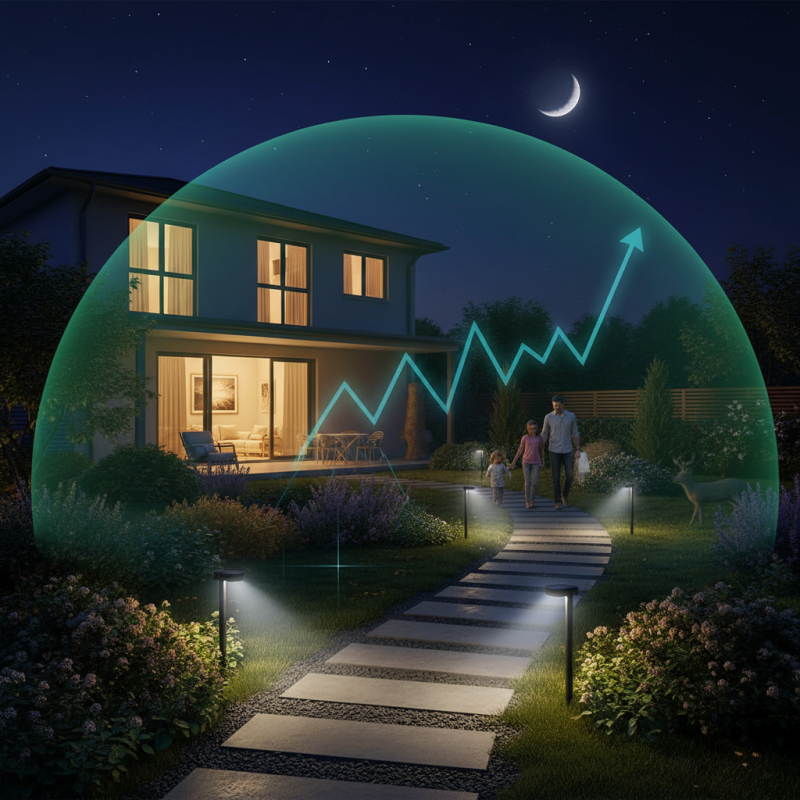
Motion sensors play a crucial role in solar outdoor lighting systems. They enhance security by detecting movement. A report by the U.S. Department of Energy noted that outdoor lighting is a key crime deterrent. When lights turn on in response to motion, it creates an alerting experience for potential intruders and provides safety for homeowners.
Incorporating motion sensors into solar lights can result in significant energy savings. According to industry studies, these devices can reduce energy usage by up to 70%. This is vital for optimizing solar power systems, as less energy waste means longer battery life. Motion-activated lights only illuminate areas when needed, ensuring efficient use of stored power.
Tips: Consider installing lights in high-traffic areas. This optimizes their effectiveness. Regularly check the sensor settings to maintain performance. Location matters; avoid placing sensors where they might be obstructed by foliage. A thoughtful approach to placement can enhance security while ensuring efficient operation.
Why Do Solar Lights Need Motion Sensors for Security?
| Feature | Description | Benefits |
|---|---|---|
| Energy Efficiency | Motion sensors enable lights to turn on only when needed, conserving energy. | Reduces electricity consumption and prolongs battery life. |
| Enhanced Security | Detects movement in designated areas, triggering lights to deter potential intruders. | Increases the likelihood of alerting homeowners to trespassers. |
| Convenience | No need to manually switch lights on and off; they operate autonomously. | Offers ease of use, especially in outdoor environments. |
| Versatile Applications | Can be used in various settings such as driveways, pathways, and gardens. | Provides flexibility in enhancing security across outdoor areas. |
| Affordability | Most solar lights with motion sensors are cost-effective. | Budget-friendly option for enhancing home security. |
FAQS
: The main types include Passive Infrared Sensors (PIR), ultrasonic sensors, and microwave sensors.
PIR sensors detect body heat, making them effective outdoors. They are widely used due to their reliability.
Yes, ultrasonic sensors use sound waves, allowing them to cover larger spaces effectively.
Microwave sensors are sensitive and cover a wide range, but they can be more expensive.
Animals and even wind can sometimes trigger these sensors, leading to false alarms.
Positioning is key. Lights should illuminate threat areas but be placed where they can effectively detect movement.
Too sensitive sensors may alarm unnecessarily, while less sensitive ones might miss important movements.
Adequate sunlight is necessary for charging. Poor placement could lead to inadequate performance and lower security.
Mounting lights too high can reduce their effectiveness in detecting movement and illuminating areas.
Balance placement, sensitivity, and battery life for effective security lighting. Regular adjustments may be necessary.
Conclusion
Solar lights have increasingly incorporated motion sensors to enhance outdoor security, leading to the question, "Why do solar lights need motion sensors?" Motion sensors play a crucial role by detecting movement, which triggers the lights to activate, thereby deterring potential intruders and ensuring safety during nighttime. The benefits of these sensors include energy efficiency, immediate illumination of specific areas, and improved overall security for homes and properties.
Understanding how motion sensors work in solar lights is essential; they typically use passive infrared or microwave technology to detect motion. Common types of motion sensors include passive infrared (PIR) sensors, which respond to heat emitted by moving objects, and active sensors that utilize radio waves. When considering installation, factors such as the placement of lights, the sensitivity of sensors, and the light's coverage area should be taken into account to maximize their effectiveness.
