Choosing the right wattage for outdoor solar lights is not simply a matter of selecting the highest number. Wattage describes energy consumption, while brightness is usually measured in lumens. A small pathway light may use 1 to 3 watts, while a security floodlight can require 5 to 15 watts or more. The ideal choice depends on the area, purpose, panel efficiency, and battery capacity.
So, what is the best wattage for outdoor solar lights? For garden paths, driveways, and decorative borders, lower-wattage models often provide sufficient illumination without draining the battery quickly. Entryways and security zones may need stronger lights with motion sensors. I have found that a 10-watt light can perform well near a garage, but its results change when the panel receives limited winter sunlight. Placement matters greatly.
Look beyond the wattage label. Check the lumen output, battery capacity, charging time, operating hours, and weather-resistant rating. A reliable manufacturer should publish these specifications clearly. Real-world testing also helps. Observe the light after a cloudy day, not only after bright sunshine. Some products promise impressive brightness but dim before dawn. That weakness deserves attention.
There is no universal answer. Measure the space, identify the lighting goal, and compare verified specifications. A practical choice may be less powerful, but more consistent. That is often the better result.
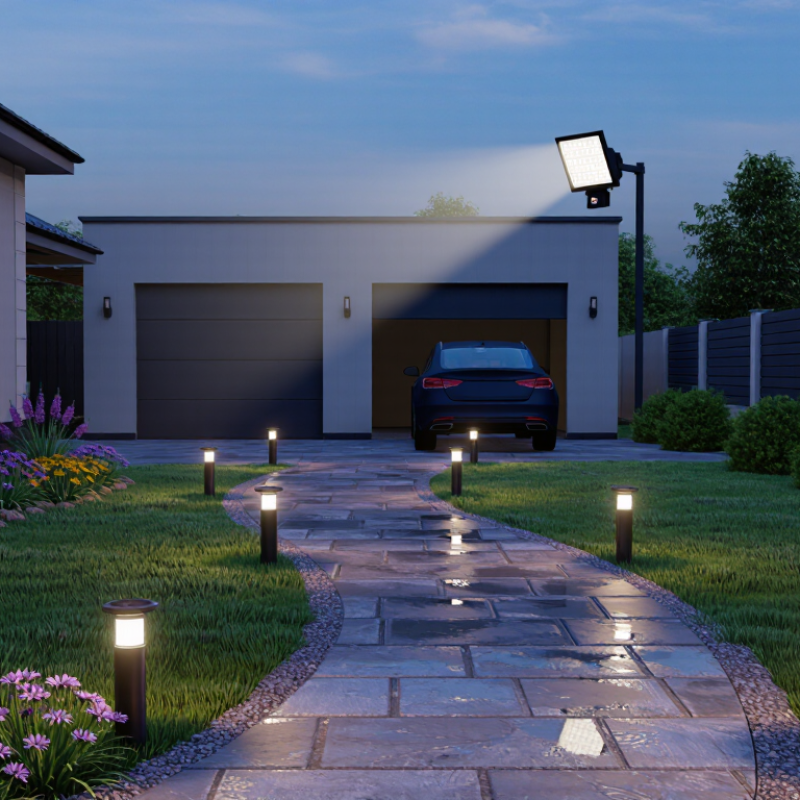
Understanding Wattage and Its Role in Outdoor Solar Lighting
Wattage describes how much electrical power a solar light uses, not how bright it automatically appears. Brightness depends on lumens, beam angle, mounting height, and surface color. The U.S. Department of Energy’s Solid-State Lighting research reports that efficient LED packages can exceed 150 lumens per watt in laboratory conditions. Real outdoor products usually perform below that figure.
Think in watt-hours. A 3-watt lamp operating for 10 hours needs about 30 watt-hours nightly. Add energy for charging, battery storage, temperature, and conversion losses. A practical design may require 40 to 45 watt-hours. The International Energy Agency’s Photovoltaic Power Systems Programme reports that solar output varies significantly with season, location, orientation, and shading. One sunny afternoon cannot represent winter performance.
Small pathway lights often need only modest power. A wider walkway, dark driveway, or security area may need higher output, better optics, or several lower-wattage fixtures. The Illuminating Engineering Society emphasizes that lighting quality depends on distribution and maintained illuminance, not wattage alone. That distinction matters beside trees and uneven paving.
I have seen people choose a 10-watt light because it sounds powerful. It still looked weak under a narrow beam. I have also seen excessive wattage create glare and waste stored energy. Check the light’s delivered lumens, runtime, battery capacity, panel rating, and local winter sunlight. The calculation is useful, but never perfect. Temperature and shade can quietly change the result.
How to Choose the Best Wattage for Outdoor Solar Lights?
Higher wattage generally supports brighter illumination, but actual brightness also depends on LED efficiency, battery capacity, solar charging conditions, and operating mode. As a practical guide, 1–3 W is suitable for pathways and decorative lighting, 5–8 W works well for steps and small areas, while 10–12 W is better for driveways and wider outdoor spaces. The values shown are representative ranges rather than universal specifications.
Assessing Lighting Needs for Different Outdoor Areas
Choosing outdoor solar light wattage begins with the area’s task, not the product label. Wattage measures energy use, while lumens measure visible brightness. The U.S. Department of Energy reports that LED lighting uses at least 75% less energy than incandescent lighting and can last up to 25 times longer. This makes lumen output more useful than wattage when comparing solar fixtures.
Paths usually need gentle guidance rather than intense illumination. A practical starting range is 10–30 lumens per fixture. Steps, entrances, and uneven surfaces may need 30–100 lumens, with careful aiming to reduce glare. Patios and seating areas often benefit from several low-output lights instead of one harsh fixture. The Illuminating Engineering Society recommends evaluating uniformity, contrast, and visual comfort, not brightness alone. I have found that spacing often matters more than adding power. Yet this varies with wall color, foliage, and personal eyesight.
Tips: Check the solar panel’s daily exposure, especially during winter. The National Renewable Energy Laboratory explains that available sunlight changes by location, season, and panel orientation. Choose adjustable fixtures when possible. Test one light after sunset before buying several. A common mistake is selecting high wattage for a shaded garden. More power cannot fix poor charging. Also, motion sensors can reduce nighttime consumption, but frequent activation may feel distracting near bedrooms or neighboring windows.
How to Choose the Best Wattage for Outdoor Solar Lights? – Assessing Lighting Needs for Different Outdoor Areas
| Outdoor Area |
Recommended Light Output |
Typical LED Wattage |
Suggested Mounting Height |
Approximate Spacing |
Recommended Lighting Purpose |
| Pathways and Walkways |
10–50 lumens per fixture |
0.5–2 W |
0.6–1.0 m |
1.8–3.0 m |
Guidance and low-level safety lighting |
| Garden Beds and Landscaping |
20–100 lumens per fixture |
1–3 W |
0.3–1.2 m |
1.5–3.0 m |
Accent lighting for plants, borders, and features |
| Steps and Stairways |
15–100 lumens per fixture |
1–3 W |
0.3–1.2 m |
One fixture per 1–2 steps or as needed |
Reduce trip hazards and improve edge visibility |
| Porches and Entryways |
100–300 lumens per fixture |
2–5 W |
1.8–2.4 m |
One or two fixtures per entrance |
Visitor identification and entrance safety |
| Patios and Decks |
100–300 lumens per fixture |
2–5 W |
1.8–2.4 m |
2.5–4.0 m |
Comfortable ambient and activity lighting |
| Driveways |
300–800 lumens per fixture |
5–10 W |
2.4–3.6 m |
4.5–9.0 m |
Vehicle and pedestrian visibility |
| Garages and Carports |
500–1,500 lumens per fixture |
8–20 W |
2.4–3.6 m |
4.5–7.5 m |
Task lighting and security around vehicles |
| Backyards and Open Lawns |
200–800 lumens per fixture |
5–10 W |
1.8–3.6 m |
4.5–9.0 m |
General illumination and perimeter awareness |
| Security Zones and Building Perimeters |
700–2,000 lumens per fixture |
10–25 W |
2.4–4.5 m |
6.0–12.0 m |
Wide-area illumination with motion activation |
Selection note: Wattage is only one indicator of performance. Compare lumens, beam angle, solar-panel size, battery capacity, operating time, motion-sensor settings, and available sunlight. The wattage ranges above assume efficient LED fixtures; actual results vary by design, weather, season, installation height, and shading.
Matching Wattage to Solar Panel and Battery Capacity
How to Choose the Best Wattage for Outdoor Solar Lights?
Matching wattage to the solar panel and battery prevents weak light and short operating times. A higher-wattage lamp is not automatically better. It consumes stored energy faster, especially during long winter nights or cloudy weather.
Start with the light’s real operating demand. A 6-watt lamp running for eight hours uses about 48 watt-hours. The battery should store more than this amount, because conversion losses and aging reduce usable capacity. A practical target is 60 to 70 watt-hours. For a 3.7-volt battery, that equals roughly 16 to 19 amp-hours. Check the product specifications carefully. Some advertised capacities are measured under ideal conditions.
The solar panel must replace the energy used each day. If four effective sunlight hours are available, a 15-watt panel produces about 60 watt-hours before losses. A 20-watt panel gives more breathing room. It also helps during hazy weather. Keep the panel clear of leaves, dust, and nearby shadows. I have seen a well-sized system perform poorly because one branch blocked afternoon sunlight.
Do not ignore seasonal changes. A setting that works in July may fail in December. Reducing brightness after midnight can extend runtime without changing the lamp. Motion sensors also lower energy use. My first estimate was often too optimistic. Real conditions deserve a safety margin.
Considering Brightness, Coverage, and Energy Efficiency
Choosing outdoor solar-light wattage starts with brightness, not the wattage number alone. Lumens show visible output, while watts show electricity consumption. A 5-watt LED can produce more useful light than an older, higher-wattage lamp.
The U.S. Department of Energy reports that LED lighting uses up to 75% less energy and can last up to 25 times longer than incandescent lighting. That advantage matters when sunlight is limited during winter.
Think about coverage next. A narrow pathway may need modest output, while a wide driveway needs stronger illumination and wider beam distribution. For a small walkway, 100–300 lumens may be practical. Larger areas often need 500 lumens or more, depending on mounting height and spacing.
These figures are starting points, not guarantees. Dark surfaces, trees, and uneven ground can reduce perceived brightness. Test one fixture at night before buying several.
Battery capacity also affects real performance. A powerful lamp with a small battery may dim after midnight. The International Energy Agency has identified efficient LED systems as essential for reducing lighting energy demand, but efficiency cannot fix poor sizing.
Choose adjustable brightness when available. Lower output on quiet nights may extend runtime. I once assumed maximum brightness was always better; it created glare and wasted stored energy. Coverage should feel even, not harsh.
Selecting the Right Wattage for Specific Outdoor Applications
Choosing wattage for outdoor solar lights requires matching light output to the application, not simply selecting the highest number. The U.S. Department of Energy reports that LED lighting can use at least 75% less energy and last up to 25 times longer than incandescent lighting. However, solar fixtures also depend on panel size, battery capacity, optics, and local sunlight.
For a garden path
3–6 watts may produce roughly 300–700 lumens, depending on fixture efficiency. This is usually enough for steps, borders, and pedestrian visibility without creating glare.
A driveway or entrance
may need 8–15 watts and wider optics.
Security areas
often require 15–30 watts, especially where mounting heights exceed three meters.
For larger parking areas
30–60 watts may be appropriate, but spacing and beam distribution matter more than wattage alone. The Illuminating Engineering Society’s RP-8 guidance emphasizes illuminance and uniformity, rather than electrical power, for outdoor roadway design.
Real installations can be less predictable. Dust, winter shading, and cloudy weather reduce charging performance. A 20-watt lamp may appear powerful but fade before dawn if its battery is undersized. The International Energy Agency notes that solar resource varies significantly by location and season.
Test one fixture for several nights. Then check brightness after a cloudy day. That practical step is often missed.
Conclusion
Choosing the right wattage is essential for creating effective and efficient outdoor solar lighting. Wattage indicates how much power a light uses, but it does not determine brightness by itself; lumens, beam angle, and light coverage are equally important. Start by evaluating the area: pathways and decorative spaces usually need lower wattage, while driveways, entrances, patios, and security zones may require stronger illumination. Consider the size of the area, the desired brightness, and whether the light will be used for general visibility or focused lighting.
The question “What is the best wattage for outdoor solar lights” does not have one universal answer. The ideal choice depends on the solar panel’s charging capacity, the battery’s storage, and the number of hours of nighttime operation. Higher-wattage lights can provide greater brightness and coverage, but they also consume more stored energy. Select a balanced system that matches your lighting needs with reliable charging and battery performance, ensuring consistent illumination and energy efficiency.
 Midmo Lights
