A solar security light should do more than switch on after dark. It should reveal a gate, path, or doorway clearly, without leaving deep shadows nearby. How to choose solar lights for security purposes begins with the site itself: note where people approach, how much sunlight reaches the panel, and where a fixture can be mounted securely. A bright lamp cannot compensate for a panel shaded by a roof or tree.
Lighting researcher Dr. John Bullough’s work offers a useful principle: “Good security lighting reveals the area that matters, not just the brightest spot.” Use that as a practical test when comparing products from China. Check measured light output, motion-sensor range, battery capacity, panel design, weather resistance, and replacement-part availability. Ask suppliers for test reports and clear specifications, rather than relying on dramatic product photos. Small details matter. A sensor that faces a busy road may trigger repeatedly; a panel aimed north in a shaded yard may recharge poorly. Installation height and angle also change what the light actually covers.
This guide will help buyers compare those trade-offs, assess supplier claims, and match a fixture to its location. There is no single best model. A light suited to a narrow side entrance may disappoint across a broad driveway. And a larger battery is not automatically better if the panel cannot recharge it. One caution: specifications do not always predict real-world performance, so request samples or independent test data when possible.
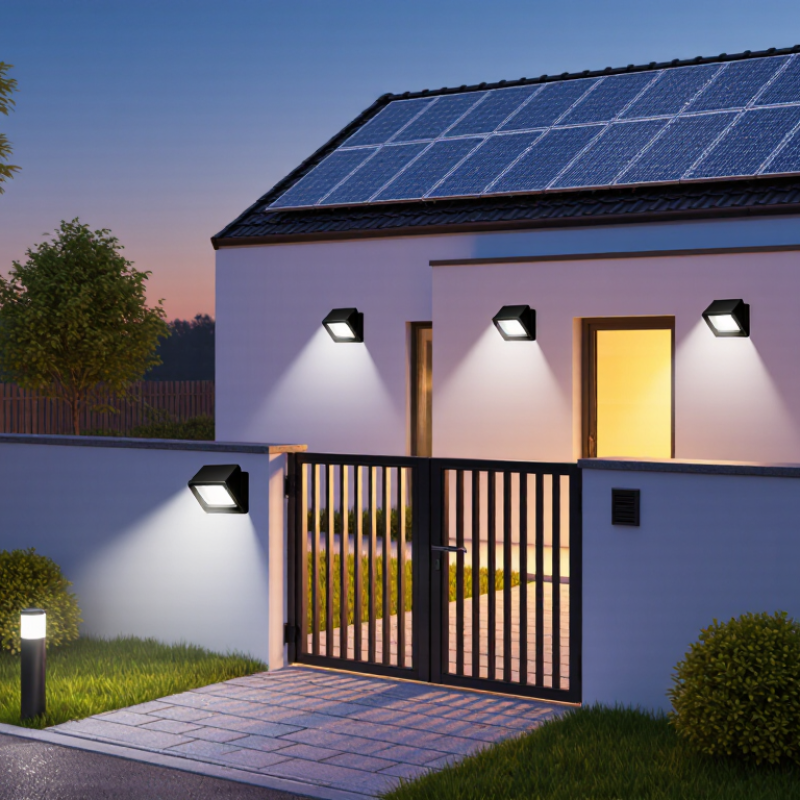
Define Your Security Needs and Installation Conditions
Define the risk before comparing specifications.
Mark the gate, side path, garage door, or dark corner that needs coverage. A driveway entrance may need a wide detection zone; a narrow walkway often needs tighter control. Note when people approach, and whether cars, pets, or moving branches could trigger the sensor. Small details matter.
Check the mounting point at night and in daylight.
A light aimed at a face can cause glare, while a panel shaded by an eave may recharge poorly. The World Bank and ESMAP’s Global Solar Atlas provides location-based solar resource data; compare monthly conditions, not only annual averages. Winter shade can be decisive. Measure the mounting height and distance to the target, then compare those figures with the stated detection range. Start with the site.
For Chinese-made options, ask for test conditions behind claims about brightness, runtime, and sensor distance. IEA PVPS’s Snapshot of Global PV Markets 2024 estimates that global solar capacity additions reached about 447 GW in 2023, but industry growth does not verify any individual light’s performance. Request battery capacity, panel output, and runtime after limited sunlight. These numbers still cannot fully predict performance in a shaded yard, so allow for a practical on-site test.
Compare Solar Panel, Battery, Brightness, and Sensor Specifications
When comparing solar panels, check rated watts, voltage, and charging time, not panel size alone. The IEA’s Solar PV Global Supply Chains report found China held over 80% of global manufacturing capacity across key solar-PV stages in 2021. That scale does not guarantee strong winter performance. NREL’s PVWatts model shows how location, tilt, and system losses affect solar output; use it as a rough guide, not a guarantee for a compact light.
For batteries, compare watt-hours, chemistry, and stated runtime. Milliamp-hours alone can mislead because voltage also matters. Ask whether runtime assumes full brightness or motion-triggered use, and check performance in cold weather. Details matter. A battery’s headline capacity does not tell you how many cloudy nights the light can manage.
Compare sustained lumens, beam angle, and mounting height; peak brightness can look impressive while leaving a dark patch beside a doorway. For the sensor, check detection distance, field of view, adjustable timer, and dusk threshold. A wide detection angle may also catch passing cars or moving branches. The specification sheet still leaves uncertainty. If possible, test the light where it will be installed, then adjust its aim and sensitivity after dark.
Evaluate Manufacturers, Product Quality, and Certifications in China
Choosing a solar security light supplier in China starts with checking how the factory works, not just comparing prices. Ask whether the company makes the lights itself or outsources key parts, such as panels, batteries, and motion sensors. A factory tour, video call, or detailed production photos can help clarify this. Small details matter. Look for clear answers about warranty handling, replacement parts, and production lead times.
Assess product quality with a physical sample whenever possible. Check the panel size, battery capacity, housing seals, and sensor response in daylight and darkness. Ask for test data on operating time after a full charge, and compare it with your expected hours of use. A sample can reveal loose wiring or uneven seals, but one unit cannot prove every batch will match. That limitation is easy to overlook.
Review certificates and reports carefully. Ask for documents that match the exact model, not a similar-looking product, and confirm the issuing laboratory and report date. Requirements vary by destination, so check which safety and environmental standards apply to your market. A certificate alone does not guarantee reliable outdoor performance. Request supporting test results, including water-resistance checks, and clarify how the supplier handles changes to components. Some paperwork looks convincing at first glance; verify the scope before relying on it.
Check Customization Options, Warranty, and After-Sales Support
When comparing solar security lights from China, ask what can actually be customized. Options may include panel size, battery capacity, motion-sensor range, light color, and mounting style. Small details matter. A narrow side yard may need a different sensor angle than a wide driveway. Request a sample or a clear specification sheet, and confirm that the listed settings apply to the model you plan to order.
Read the warranty before judging its length. Check how coverage handles batteries, solar panels, sensors, and water ingress, and ask what evidence is needed for a claim. A long warranty means little if exclusions are vague. Ask for specifics.
After-sales support matters when a light stops charging months after installation. Confirm response times, replacement-part availability, troubleshooting instructions, and whether support can explain battery or wiring checks with photos. That matters.
Keep written answers and order specifications together; small differences in connectors or mounting hardware can complicate replacements. Customization is useful, but too many special configurations may slow production or make spare parts harder to match. It is worth weighing that trade-off.
Compare Total Cost, Shipping, and Import Requirements
When comparing solar security lights from China, calculate landed cost, not just the factory price. Include product cost, tooling, inspection, inland transport, ocean or air freight, insurance, customs duties, taxes, and delivery to your site. Ask suppliers to quote the same quantities and Incoterm; otherwise, prices are not directly comparable. Small fees add up.
Shipping can change the calculation quickly. UNCTAD’s Review of Maritime Transport 2024 reported that Shanghai-to-Europe container spot rates rose 256% between October 2023 and June 2024. That spike is not a current quote, but it shows why buyers should request dated freight estimates and check what surcharges are included. Compare cartons, pallet dimensions, gross weight, and estimated transit time. A compact light with a large battery may cost more to ship than its product price suggests.
Check import requirements with your customs broker and the destination authority before placing a deposit. Confirm the likely tariff classification, duty rate, product labels, and any required electrical or battery documentation; rules differ by market and product design. Request a commercial invoice, packing list, country-of-origin details, and battery specifications. For outdoor models, verify the stated ingress-protection rating and test evidence, not just a sales-sheet claim. Paperwork can still be incomplete, even with a careful supplier, so build time for review into the delivery plan.
FAQS
Check rated watts, voltage, and charging time, not panel size alone. Location, tilt, and system losses can change solar output. Treat estimates as rough guides.
No. Compare watt-hours, battery chemistry, and stated runtime. Ask whether runtime assumes full brightness or motion-triggered use. Cold weather can reduce performance.
Compare sustained lumens, beam angle, and mounting height. Peak brightness may still leave a dark patch beside the door. Test the actual location.
Check detection distance, field of view, adjustable timer, and dusk threshold. A wide angle may catch passing cars or moving branches. Aim it carefully.
Ask whether the company makes the lights or outsources parts like panels, batteries, and sensors. Request production photos or a video call. Details matter.
Check panel size, battery capacity, housing seals, and sensor response in daylight and darkness. Ask for full-charge runtime data. One sample helps, but it cannot confirm every batch.
Match documents to the exact model, then verify the issuing laboratory and report date. Requirements depend on your destination market. A certificate alone proves little about outdoor performance.
Ask about warranty handling, replacement parts, lead times, and how component changes are reported. Request water-resistance test results too. Paperwork can look convincing; checking its scope takes effort.
Conclusion
Choosing the right solar security lights from China starts with understanding your property’s security needs and installation conditions, including the areas to cover, available sunlight, mounting locations, and weather exposure. How to choose solar lights for security purposes depends on matching these practical requirements with suitable specifications. Compare the solar panel’s charging performance, battery capacity, light output, and sensor range so the system can provide dependable illumination when needed.
Before purchasing, assess the manufacturer’s production capabilities, product quality controls, and relevant certifications. Ask about customization options, warranty coverage, replacement parts, and after-sales support, and request clear product documentation. Finally, compare the total cost rather than the unit price alone, taking shipping, packaging, and import requirements into account. A careful review of these factors can help you select reliable lights that fit your site, budget, and long-term maintenance needs.
 Midmo Lights
