Solar lighting can transform a quiet garden into a warm, inviting space after sunset. A few carefully placed fixtures can highlight steps, flower beds, trees, and outdoor seating areas. This guide explains How to use solar lights for decorative purposes while keeping the design balanced and practical.
You will explore seven creative approaches, from glowing pathways to illuminated planters and soft table accents. Each idea considers light color, fixture placement, charging conditions, and visual proportion. Warm white bulbs often create a relaxed atmosphere, while cooler tones can make modern patios feel sharper. Panels need direct sunlight, so shaded corners may produce disappointing results. That detail is easy to overlook.
Good decorative lighting should support the space, not compete with it. Place brighter lights near entrances and use gentler illumination around seating areas. Keep fixtures away from areas where lawn equipment or foot traffic could damage them. Weather-resistant materials also matter, especially during prolonged rain or freezing conditions. Product labels can help, but they are not always perfectly clear.
Some arrangements may look attractive online but feel excessive in a real garden. I have found that spacing lights farther apart often creates a more natural effect. However, every property has different trees, walls, and sunlight patterns. Experimenting for one evening can reveal problems before permanent placement. These practical suggestions combine design awareness with everyday installation experience. The goal is simple: create outdoor details that feel intentional, safe, and genuinely enjoyable.
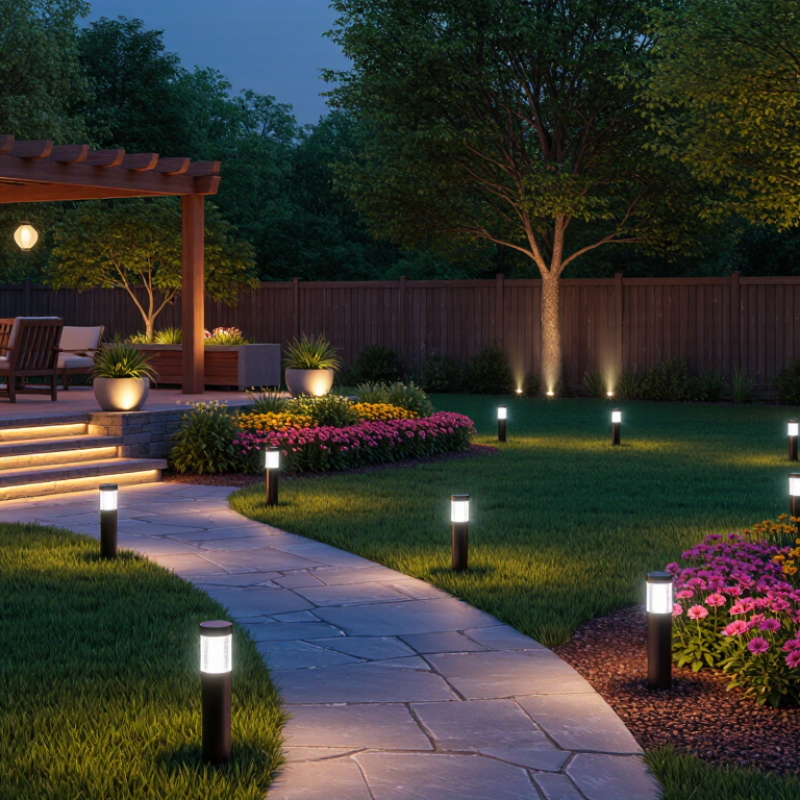
Choosing solar lights for decorative goals starts with the mood you want to create. Warm white lights make patios feel softer and more welcoming. Cooler light can suit modern paths, but it may feel harsh near seating areas. Choose small lanterns for tables, string lights for fences, and stake lights for borders. Check brightness carefully. Decorative lights should guide attention, not overpower the garden.
Tips: Place the solar panel where it receives several hours of direct sunlight. Avoid shaded walls, thick branches, and covered balconies. Select weather-resistant housings for exposed areas. A longer-lasting battery helps during cloudy evenings, although performance may still drop in winter. Test one light before buying many.
Spacing also shapes the final effect. Lights placed too closely can look cluttered. Wider gaps often create a calmer, more elegant rhythm. Keep pathways visible, but avoid placing fixtures where people may trip. I once chose attractive lights with weak panels, and the display faded before midnight. The design looked good in daylight, yet failed when needed. That mistake taught me to judge both appearance and function. Solar lighting is not completely maintenance-free; panels need occasional cleaning, and batteries eventually lose capacity.
Recommended target brightness for common decorative solar-light applications
Use lower-lumen lights for subtle pathway and step accents, and higher-lumen fixtures for walls, trees, and water features. Warm-white light is generally suitable for relaxing outdoor spaces, while strategic spacing helps create visual depth without excessive glare.
Brightness figures are practical planning benchmarks for decorative LED solar fixtures and are not based on any specific brand or company.
Decorative solar lights work best when placement follows how people use the garden. Watch the space during daytime before installing anything. Mark the entrance, seating area, pathways, steps, and favorite planting beds. These become separate outdoor zones, each with a clear purpose.
A light near the gate should guide movement without shining into a visitor’s eyes. Along a path, stagger fixtures on both sides instead of creating a rigid runway. Keep them away from lawn edges where mowing may damage them. Seating zones need softer, lower lights, while steps require steady illumination and careful spacing. Test the height after dark.
Sunlight matters more than decoration. Place each panel where it receives several hours of direct sun, away from walls, dense branches, and seasonal shadows. I once placed lights beneath a beautiful tree, but winter shade made them unreliable. That mistake changed my planning method. I now check the area in the morning and evening before choosing final positions.
Use warm light around benches and flower beds to create a relaxed atmosphere. Keep brighter fixtures near entrances and uneven ground. Avoid placing too many lights together; visual clutter can make a small yard feel smaller. Leave enough space for drainage, cleaning, and battery access. Some nights may still be dim after cloudy weather. That is normal, not necessarily a product failure. Recheck the layout after rain, plant growth, and furniture changes.
Solar lights can turn an ordinary walkway into a gentle evening feature. Place them along pathway edges, not directly in the walking line. Spacing them 1.5 to 2 meters apart usually creates balanced guidance without excessive brightness. Choose warm-white light for a softer garden mood. Cool light can look harsh beside flowers and natural stone. Keep each panel clear of leaves, fences, and heavy shade. Direct sunlight matters more than decoration.
I once placed several lights beneath a dense shrub. They looked attractive during the day, but barely worked after sunset. That mistake taught me to check sunlight throughout the afternoon. For garden accents, position small lights near ornamental grasses, raised beds, or textured tree bark. Angling one light toward a feature can create depth. Avoid pointing light into windows or nearby seating areas. The effect should support the garden, not dominate it.
Tips: Test the layout before securing anything. Watch the shadows for one evening. Wipe panels regularly, especially after dusty weather. Leave space around growing plants, because branches may block charging later. Use weather-resistant fixtures and inspect them after storms. I still prefer fewer lights in most gardens; too many can flatten the scene and disturb its natural character.
7 Best Ways to Use Solar Lights for Decorative Purposes: Highlighting Patios, Structures, and Water Features
Solar lights can make a patio feel warmer without adding cables across walking areas. Place low-level lights along steps, seating edges, and planters. Warm white light usually preserves a relaxed evening atmosphere. A 2023 U.S. Department of Energy report states that LED lighting uses at least 75% less energy than incandescent lighting. It also lasts much longer. That efficiency suits small decorative fixtures, although poor winter charging remains a practical weakness.
Use narrow-beam lights to outline pergolas, arches, fences, and garden walls. Aim the beam at timber texture or climbing plants, not directly toward guests. Keep fixtures separated, because crowded light can flatten the structure’s appearance. The International Energy Agency’s Renewables 2024 report recorded about 510 gigawatts of renewable capacity added globally in 2023, with solar providing most growth. This indicates strong solar momentum, but it does not guarantee reliable performance in every garden.
Water features need extra care. Position lights beside ponds, fountains, or streams to reveal moving reflections. Never place a fixture underwater unless its instructions specifically permit immersion. Choose weather-resistant housing, protect connections from standing water, and inspect seals after heavy rain. Reflections can become surprisingly bright. A dimmer light may look better than several powerful ones. I have found that planning from the viewing seat works best, though my first layout still created unwanted glare near the path. That mistake was useful.
A practical comparison of decorative applications, suitable light characteristics, installation considerations, and expected visual effects.
| No. | Decorative Application | Best Location | Recommended Light Type | Typical Color Temperature | Key Installation Consideration | Expected Decorative Effect | Weather-Resistance Guidance |
|---|---|---|---|---|---|---|---|
| 1 | Outline a Patio or Deck | Along steps, borders, railings, and seating areas | Low-level path lights or compact stake lights | Warm white: 2,200–3,000 K | Place fixtures at regular intervals and keep panels clear of shadows from walls, furniture, and plants. | Defines edges, improves visual balance, and creates a soft evening glow without overpowering the seating area. | Use outdoor-rated housings; IP44 or higher is generally suitable for sheltered locations, while exposed areas benefit from higher protection. |
| 2 | Illuminate a Pergola or Gazebo | Roof beams, posts, and upper perimeter sections | Solar string lights or small hanging lanterns | Warm white: 2,200–3,000 K | Secure cables away from walkways and allow the solar panel to face an area with unobstructed daylight. | Adds a welcoming canopy effect and visually extends the usable outdoor living space after sunset. | Choose weather-resistant fixtures designed for outdoor use; sealed connectors help reduce moisture-related faults. |
| 3 | Accentuate Trees and Shrubs | Garden beds, tree bases, and planting borders | Adjustable solar spotlights or uplights | Warm white: 2,700–3,000 K | Aim the beam at foliage or textured bark, and avoid pointing bright light directly toward neighboring windows. | Creates depth, highlights natural textures, and adds layered lighting to otherwise dark garden areas. | Use corrosion-resistant materials and an outdoor rating appropriate for direct exposure to rain and irrigation. |
| 4 | Frame a Walkway or Driveway | Both sides of paths, garden entrances, and driveway edges | Solar bollards or path lights with downward illumination | Neutral to warm: 2,700–3,500 K | Keep fixtures outside the main walking line and install them at a consistent height for a cleaner visual rhythm. | Provides a repeated pattern of light that guides movement and makes the landscape appear more structured. | For exposed ground locations, select durable fixtures with sealed battery compartments and strong resistance to dust and water. |
| 5 | Highlight a Fountain or Pond | Outside the water perimeter or on nearby landscape features | Solar spotlights positioned toward the water surface; use submersible products only when specifically designed for immersion | Warm white or color-changing | Position lights to reveal reflections while avoiding glare into seating areas; keep non-submersible products away from splashing water. | Emphasizes movement, reflections, and shimmering highlights across the water surface. | Use products with a suitable IP rating for the exact location. Any light installed in water must be explicitly rated for underwater use. |
| 6 | Decorate Fences, Walls, and Trellises | Fence posts, brick walls, privacy screens, and climbing-plant supports | Solar wall lights, hanging jars, or decorative string lights | Warm white: 2,200–3,000 K | Mount or hang fixtures securely and maintain enough spacing to prevent a cluttered appearance. | Turns vertical surfaces into illuminated backdrops and adds texture to boundaries around a patio or garden. | For fully exposed walls and fences, select outdoor-rated fixtures with sealed wiring and protection against rain. |
| 7 | Create Seasonal or Event Displays | Tables, planters, balconies, outdoor dining areas, and temporary decorations | Solar lanterns, decorative jars, candle-style lights, or mini string lights | Warm white or soft amber | Choose lightweight, portable fixtures and place the solar panel where it can receive several hours of direct sunlight. | Creates an intimate focal point for dinners, celebrations, and seasonal displays without requiring nearby mains wiring. | Use splash-resistant products outdoors and bring portable fixtures indoors during severe weather or prolonged wet conditions. |
Note: Solar-light performance depends on sunlight exposure, season, battery condition, temperature, and the individual product design. The color-temperature ranges and weather-resistance guidance above are general recommendations for decorative outdoor lighting.
Decorative solar lights remain attractive only when their small components receive regular care.
The U.S. Department of Energy reports that LED lighting uses at least 75% less energy than incandescent lighting and can last up to 25 times longer.
However, efficient LEDs cannot compensate for a shaded panel or a weak battery. Wipe each panel monthly with a soft, damp cloth. Remove pollen, dust, and bird residue gently. Avoid abrasive cleaners, which can scratch the surface and reduce charging performance. Trim nearby branches when they block afternoon sunlight.
Battery maintenance deserves closer attention.
Check the battery compartment every three to six months, especially after heavy rain or freezing weather. Look for corrosion, cracked seals, or moisture droplets. Replace damaged parts with compatible specifications, not the cheapest available option.
The International Energy Agency’s Renewables 2024 report confirms solar PV remains the fastest-growing renewable electricity source, but small decorative systems still depend heavily on local sunlight and storage quality.
That distinction is easy to miss. A light may appear faulty when poor placement is the real problem.
Move it away from porch lamps, which can confuse automatic sensors. Allow at least six hours of direct sunlight when possible.
During long cloudy periods, shorter nighttime operation is normal.
I have found that grouping lights too closely also creates uneven charging. Leave space between fixtures.
Inspect the display before seasonal events, because one failed connection can darken an entire pathway.
Perfect upkeep is unrealistic. Consistent checks work better.
Watch the garden during daylight. Mark the entrance, paths, steps, seating area, and planting beds. Treat each area as a separate zone. Each zone needs a clear purpose.
Place them beside the path, never in the walking line. Space them about 1.5 to 2 meters apart. Stagger both sides for a natural look. Keep them away from lawn edges.
Aim entrance lights toward the ground. Keep beams away from visitors’ eyes, windows, and seats. Brighter light suits gates and uneven ground. Test the height after dark.
Choose a position with several hours of direct sunlight. Avoid walls, dense branches, fences, and seasonal shadows. Check the area in the morning and afternoon. Decoration cannot replace sunlight.
Warm-white light usually creates a softer garden mood. Use it near benches, flowers, textured bark, and patios. Cooler light may look harsh beside stone and plants. The effect should feel gentle.
Aim a narrow beam at timber, arches, walls, or climbing plants. Light one feature instead of crowding the whole area. Leave space between fixtures. Too many lights flatten the scene.
Place lights beside the water to reveal moving reflections. Never use underwater lighting unless the instructions specifically allow immersion. Protect connections from standing water. Reflections can become surprisingly bright.
Cloudy weather can reduce charging for several nights. Leaves, dust, winter shade, and plant growth may also block panels. Wipe panels regularly and inspect the layout after rain. I once trusted a beautiful tree for shade, and the lights became unreliable.
Leave room for drainage, cleaning, and battery access. Choose weather-resistant fixtures. Keep branches away from panels. Recheck positions after storms, furniture changes, and seasonal growth. My first layout needed adjustment.
How to use solar lights for decorative purposes begins with choosing styles, brightness levels, and light colors that match your outdoor setting. Consider lanterns, string lights, spotlights, and pathway fixtures according to the mood you want to create and the amount of sunlight available. Before installing them, plan your outdoor zones, such as entrances, walkways, seating areas, gardens, and focal points, so the lighting feels balanced rather than crowded.
Solar lights can define pathways, add gentle accents around plants, and draw attention to flowers, trees, patios, pergolas, fences, and water features. Use brighter fixtures to highlight structures or architectural details, while softer lights can create a calm atmosphere around relaxing spaces. For a polished display, position lights where their solar panels receive adequate sunlight and avoid placing too many fixtures in one area. Regularly clean the panels, check their placement, remove debris, and replace damaged components when needed. With thoughtful planning and simple maintenance, decorative solar lighting can make outdoor spaces feel welcoming, attractive, and enjoyable after dark.

Midmo Lights