 Midmo Lights
10 Best Tips for Solar Lights Performance in Cloudy Weather?
Solar lights are a great energy-efficient option for outdoor lighting. But how do solar lights work in cloudy weather? To understand this, we consulted Dr. Emily Carter, a renewable energy expert. She states, “Solar lights can still function in cloudy conditions, but their efficiency diminishes.”
Many people underestimate the effectiveness of solar lights during overcast days. While sunlight is crucial for their performance, solar panels can still collect dispersed daylight. This means they are not entirely ineffective when the sun hides. However, long periods without direct sunlight can lead to decreased battery charge and shorter illumination times.
It's essential to select solar lights with high-quality batteries and efficient solar panels. Look for lights designed specifically for low-light conditions. Regular maintenance is also crucial. Dust or debris on solar panels can further reduce their efficiency. Understanding how different weather conditions impact solar lights can significantly enhance their performance, especially in unpredictable climates.
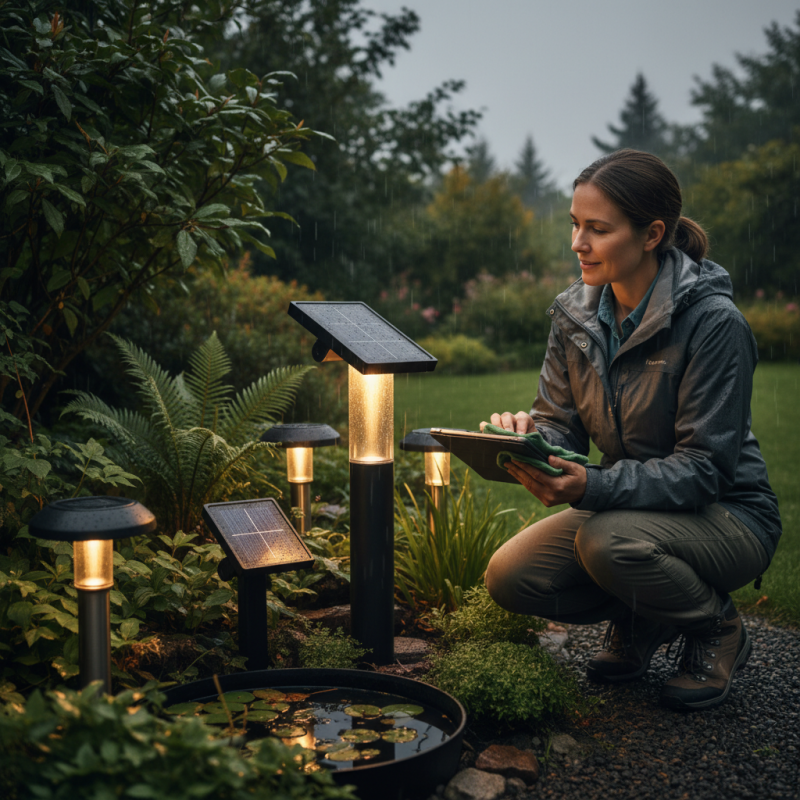
Understanding Solar Light Functionality in Cloudy Conditions
Cloudy weather can challenge the performance of solar lights. These lights rely on sunlight to charge their batteries. In overcast conditions, solar panels receive less light, which can limit their efficiency. Understanding how solar lights function is essential for maximizing their use.
Positioning solar panels correctly can enhance performance. Aim them toward the sunniest spot, even in cloudy days. Additionally, keeping the panels clean allows more sunlight to penetrate. Regular maintenance helps in optimizing energy absorption.
Another important tip is to choose solar lights with larger batteries. Bigger batteries can store energy more effectively, providing longer illumination hours. Investing in quality products will often yield increased reliability. Implementing these strategies can significantly improve how solar lights perform, even when the sun isn’t shining brightly.
10 Best Tips for Solar Lights Performance in Cloudy Weather
| Tip Number | Tip Description | Expected Outcome | Implementation Difficulty |
|---|---|---|---|
| 1 | Optimize Solar Panel Orientation | Maximized sun exposure | Medium |
| 2 | Clean Solar Panels Regularly | Increased efficiency | Easy |
| 3 | Use High-Quality Batteries | Longer light duration | Medium |
| 4 | Install Solar Lights in Open Spaces | Better light output | Easy |
| 5 | Consider a Dual-Function Light | Enhanced performance | Hard |
| 6 | Adjust Settings for Low Light Conditions | Improved adaptability | Medium |
| 7 | Choose Solar Lights with Motion Sensors | On-demand lighting | Easy |
| 8 | Select Lights with Built-in Solar Storage | Increased usability | Medium |
| 9 | Utilize Solar Lights with Extra Bright LEDs | Bright illumination | Medium |
| 10 | Experiment with Different Locations | Optimal placement | Easy |
FAQS
: Cloudy weather reduces sunlight exposure, limiting the efficiency of solar lights.
Position solar panels toward the sunniest spots, even in overcast conditions.
Regular cleaning can improve energy absorption by up to 30%.
Larger batteries store more energy, providing longer illumination during low sunlight.
Batteries should be checked and replaced every three to five years for optimal performance.
Yes, placing lights in partial shade can still yield effective performance.
New materials and bifacial panels are improving solar efficiency under low-light conditions.
No, they often struggle with light intensity during prolonged cloudy days.
Continued innovation is needed to maintain performance during less ideal weather conditions.
Inconsistent light intensity, especially during cloudy days, is a frequent complaint.
Conclusion
Solar lights are designed to harness sunlight for energy, but their efficiency can be significantly reduced in cloudy weather. Understanding how solar lights work in cloudy weather involves recognizing that solar panels utilize both direct and diffuse sunlight. Factors such as panel angle, quality, and size can greatly impact energy absorption during overcast conditions. Optimal solar panel specifications, including enhanced light sensitivity and higher efficiency ratings, can lead to better performance even when sunshine is limited.
Maintenance practices, such as regular cleaning and ensuring unobstructed sunlight access, can further enhance solar light performance in low light conditions. As solar technology continues to evolve, future trends promise innovations that will improve the functionality of solar lights in cloudy environments, allowing users to optimize energy use and maintain illumination throughout varied weather scenarios.
