When considering the question of "What is the best location to install solar lights," it’s essential to draw insights from experts in the field. Dr. Emily Greene, a leading solar energy specialist, states, “The efficiency of solar lights depends greatly on their placement.” Proper installation can amplify the effectiveness of solar lighting systems.
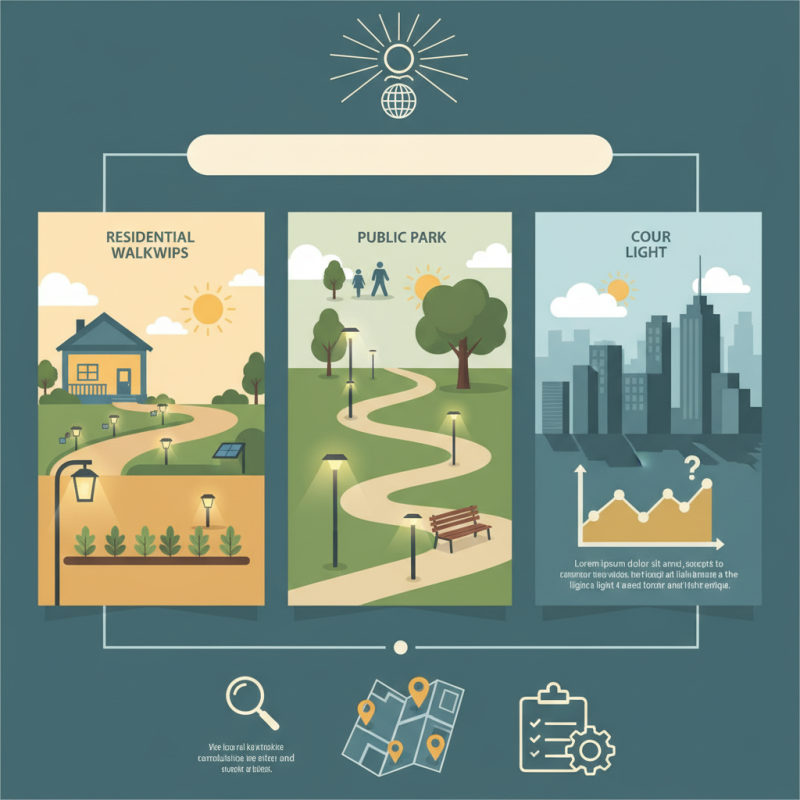
Residential areas, parks, and outdoor pathways are prime spots for these lights. In residential settings, placing lights near walkways can enhance safety and aesthetics. Parks benefit from solar lights illuminating trails while preserving their natural beauty. However, certain locations face challenges, such as shading from trees or buildings, which can hinder performance.
Moreover, while solar lights are beneficial, they are not universally effective. Areas with inconsistent sunlight may require adjustments or supplementary lighting. Recognizing these nuances is crucial before setting up solar lighting. In summary, while there are optimal locations, the unique characteristics of each area must be carefully evaluated to ensure maximum efficiency and effectiveness.
Optimal Climate Conditions for Solar Light Installation
When considering the best locations for solar light installation, climate conditions significantly impact efficiency. Regions with high solar irradiance are optimal. For instance, areas in the equatorial belt and deserts often receive over 5 kWh/m² per day. According to the National Renewable Energy Laboratory, places like the Southwestern United States can achieve up to 7 kWh/m². This abundance of sunlight ensures solar lights charge effectively during the day.
Moreover, locations with minimal cloud cover and low humidity levels enhance solar performance. Coastal areas, known for their higher humidity, can hinder light efficiency. Poor sunlight exposure can lead to inadequate charging. A report from the International Energy Agency indicated that regions with consistent, clear weather patterns see a 20% increase in solar energy capture. This highlights the importance of local weather conditions in planning the installation.
Wind and snow can also affect solar installations. Regions with harsh winters face challenges, as accumulated snow blocks sunlight. Yet, snow can slide off sloped panels, helping maintain efficiency. Attention must be given to both temperature and precipitation. Ensuring the right location will yield the best performance and longevity for solar lights.
Urban Areas: Maximizing Efficiency in City Environments
Urban areas are bustling with activity and innovation. The integration of solar lights in these environments can enhance safety and aesthetics. Streets, parks, and public spaces can benefit significantly from this sustainable technology. Solar lights provide illumination where electricity is often unreliable or costly.
Strategically placing solar lights in busy pedestrian zones increases visibility. This not only deters crime but also elevates the urban experience. Large city parks, where night-time activities occur, can create a magical atmosphere with the right lighting. However, the installation must consider local regulations and aesthetic guidelines.
It's important to reflect on potential challenges. Urban structures can obstruct sunlight, leading to inconsistent performance. Regular maintenance is vital to ensure functionality. Decision-makers must navigate these issues carefully to maximize the benefits of solar lighting. Balancing efficiency and environmental considerations is essential for sustainable urban living. Finding the right locations can lead to impactful improvements without compromising city integrity.
Best Locations for Installing Solar Lights Globally
Rural Spaces: Benefits of Solar Lights in Remote Locations
Rural spaces often lack adequate lighting, affecting safety and daily life. Installing solar lights can transform these areas. Solar lights are independent of the grid. They harness energy from the sun, making them perfect for remote locations. With minimal maintenance, they provide a reliable lighting solution.
When considering solar lights, assess your needs carefully. Reflect on the most frequented areas. Pathways, entrances, and communal gathering spots benefit greatly from illumination. Quality solar lights can enhance security and visibility, boosting the sense of safety among residents.
Tips: Select solar lights with motion sensors. They activate when someone approaches, saving energy. Ensure the lights are durable to withstand harsh weather. Regularly check for obstructions like overgrown vegetation. This can maintain optimal performance and brightness. While solar lights have many advantages, remember that they depend on sunlight. Locations with prolonged cloud cover may require backup solutions.
Coastal Regions: Harnessing Solar Power by the Sea
Coastal regions present unique opportunities for harnessing solar power. The proximity to the sea offers ample sunlight and often less air pollution, making solar energy an optimal choice. According to the International Renewable Energy Agency (IRENA), coastal areas enjoy about 15-20% more sunlight compared to inland regions. This advantage significantly enhances the efficiency of solar installations.
One interesting aspect of coastal solar installations is their ability to resist corrosion. Saltwater can be damaging. However, using corrosion-resistant materials can increase the lifespan of solar panels. Reports indicate that with proper maintenance, these installations can last over over 30 years. It's vital to choose the right components for durability.
Tip: When choosing solar lights for coastal areas, opt for options designed specifically for marine environments. Such products can withstand harsh conditions.
Sunlight in coastal areas may still fluctuate due to weather changes, but solar technology continues to improve. Energy storage solutions are critical. They allow excess energy to be stored for cloudy days or nighttime. A recent study from the National Renewable Energy Laboratory highlights that combining solar with effective energy storage can significantly increase energy reliability.
Tip: Consider solar lights with built-in batteries for consistent performance, especially in unpredictable coastal climates. This ensures that your setup remains functional regardless of weather conditions.
High Altitude Areas: Unique Considerations for Solar Lighting
High altitude areas present unique challenges for solar lighting installations. The thinner atmosphere affects solar panel efficiency due to increased UV radiation exposure. Research from the Solar Energy Industries Association (SEIA) shows that solar panels can generate more energy at higher elevations, but potential weather extremes complicate installation.
Installation of solar lights in these regions necessitates careful planning. Wind resistance becomes a concern, especially during storms. It is essential to choose robust fixtures designed to withstand harsh conditions. Batteries may also require special attention, as colder temperatures can reduce their efficiency significantly.
Tips: Monitor local weather patterns before installation. This helps in selecting the right materials and positioning solar lights effectively. Regular maintenance is crucial at high altitudes. Inspect for wear and ensure optimal performance, especially after severe weather events. Always be prepared for unexpected challenges in these rugged terrains.
Best Locations for Installing Solar Lights Globally? - High Altitude Areas: Unique Considerations for Solar Lighting
| Location |
Altitude (meters) |
Average Solar Radiation (kWh/m²/day) |
Recommended Solar Light Type |
Considerations |
| Andes, Peru |
3500 |
6.5 |
Solar LED Flood Lights |
High UV exposure, energy-efficient options needed. |
| Himalayas, Nepal |
4800 |
5.8 |
Solar Path Lights |
Durability against cold and wind, low light pollution. |
| Rocky Mountains, USA |
2200 |
6.2 |
Solar Street Lights |
Seasonal variations in sunlight; consider adjustable settings. |
| Swiss Alps, Switzerland |
1500 |
6.0 |
Integrated Solar Garden Lights |
Aesthetic integration with scenery, focus on warmth of light. |
| Tibetan Plateau, China |
4000 |
5.5 |
Portable Solar Lanterns |
Mobility for rural areas, lightweight and robust design. |
FAQS
: Solar lights enhance safety and aesthetics. They illuminate public spaces where electricity is expensive or unreliable.
Strategic placement in pedestrian zones increases visibility. This deters crime and enhances the urban experience.
Urban structures can block sunlight. This may lead to inconsistent performance of solar lights.
Regular maintenance is vital. This ensures the functionality and longevity of solar installations in urban areas.
Coastal areas receive 15-20% more sunlight and have less pollution, improving solar panel efficiency.
Corrosion-resistant materials are essential. They increase the lifespan of solar panels exposed to saltwater.
Energy storage allows excess energy to be saved for cloudy days or nighttime. This increases reliability dramatically.
Consider wind resistance and harsh weather. Choosing robust fixtures can help withstand extreme conditions.
Thinner atmosphere at high altitudes increases UV exposure, possibly enhancing energy generation.
Monitor local weather patterns and conduct regular maintenance. Prepare for unexpected challenges to maintain performance.
Conclusion
When considering solar lights, one may ask, "What is the best location to install solar lights?" The optimal climate conditions play a crucial role, as areas with abundant sunlight ensure maximum efficiency. Urban environments can greatly benefit from solar lights by enhancing safety and sustainability without straining the electrical grid. In contrast, rural spaces gain from solar technology, as it provides reliable lighting in remote locations, improving accessibility and security.
Coastal regions also present an excellent opportunity for solar light installation, where the proximity to sunlight combined with natural scenery can enhance coastal infrastructure. Additionally, high altitude areas require unique considerations due to differing weather patterns and sunlight intensity, but they too can effectively utilize solar power for lighting solutions. Overall, the best location for installing solar lights varies by environment, but each setting has distinct advantages that can be leveraged for optimal performance.
 Midmo Lights
