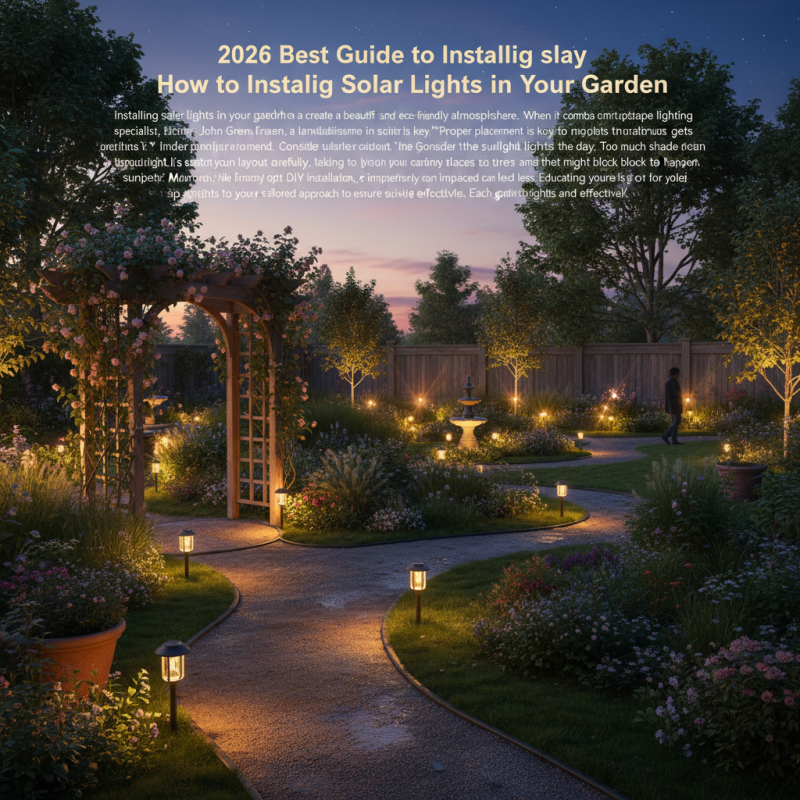
Installing solar lights in your garden can create a beautiful and eco-friendly atmosphere. When it comes to understanding "How to install solar lights correctly in the garden," experts can provide invaluable insights. John Green, a landscape lighting specialist, emphasizes, "Proper placement is key to maximizing the benefits of solar lights."
The installation process isn't just about sticking lights in the ground. Consider the sunlight exposure each location gets throughout the day. Too much shade can hinder performance. It's essential to plan your layout carefully, taking into account trees, fences, and other structures that might block sunlight.
Moreover, while many opt for DIY installations, mistakes can happen. Lighting that is too dim or improperly placed can lead to disappointment. Educating yourself on the specifications for your chosen lights can help avoid these pitfalls. Each garden is unique, requiring a tailored approach to ensure solar lights shine brightly and effectively.
Choosing the Right Solar Lights for Your Garden
When it comes to picking solar lights for your garden, several factors are crucial. According to the
Solar Energy Industries Association,
the market for solar garden lights has surged by 30% over the last five years.
This growth reflects a rising interest in sustainable options. Many homeowners are switching to solar
because it reduces energy bills and minimizes carbon footprints.
Choosing the right solar lights can enhance both safety and aesthetics. Look for products that provide
at least 100 lumens for pathways and around
200 lumens for larger areas. This ensures
sufficient brightness without disturbing the natural ambiance. Remember to consider the solar panel size,
as larger panels generally charge faster and last longer.
Tips: Test different light placements before making permanent
adjustments. It can lead to surprising discoveries about how light interacts with garden features.
Additionally, check if lights are rated for your region's climate, as poor performance is common where
weather conditions fluctuate dramatically. Making informed choices can elevate your outdoor space while
embracing eco-friendliness, even if you need to adapt your preferences along the way.
Planning the Optimal Layout for Solar Light Installation
When planning the optimal layout for solar lights in your garden, consider key elements such as sunlight availability and the illumination needs of various areas. Research indicates that solar lights perform best with a minimum of six hours of direct sunlight daily. This ensures they charge efficiently, providing ample light after sunset.
Placement is crucial. Aim to strategically set lights along pathways, in flower beds, and near seating areas to enhance safety and aesthetics. Industry reports suggest that integrating lights every 10-12 feet along pathways fosters a comforting atmosphere. Overloading a small area with too many lights can lead to glare and diminished visibility.
**Tip:** Use a mix of ambient and task lighting. Place taller lights to illuminate larger sections and shorter fixtures for closer areas. This layered approach creates depth and adds visual interest.
Don't overlook the importance of seasonal changes. As trees grow or foliage thickens, shadows may increase in certain spots. Regularly reassess your layout to ensure optimal performance of your solar lights. Adapting to these changes keeps your garden beautiful and functional.
2026 Best Guide to Installing Solar Lights in Your Garden - Planning the Optimal Layout for Solar Light Installation
| Dimension |
Recommended Value |
Description |
| Light Output (Lumens) |
50-200 |
The brightness level of solar lights suitable for garden areas. |
| Installation Height (Feet) |
6-10 |
Recommended height for installing solar path lights for optimal illumination. |
| Spacing Between Lights (Feet) |
10-15 |
Ideal distance between lights to provide even coverage without dark spots. |
| Battery Life (Hours) |
6-12 |
Duration lights will operate on a full charge. |
| Charging Time (Hours) |
4-6 |
Time taken for solar lights to fully recharge in direct sunlight. |
| Solar Panel Size (Inches) |
5-10 |
Dimensions of the solar panel required for effective charging. |
Step-by-Step Installation Process of Solar Lights
Installing solar lights in your garden can enhance both beauty and security. The step-by-step installation process is straightforward. Start by choosing the right location. Ideal spots receive at least six hours of sunlight daily, ensuring optimal charging. Ground surfaces should be soft and level for easy installation.
Next, prepare the lights. Remove any packaging and check components. Many solar lights come with a stake that makes installation simple. Push the stake into the ground firmly. The depth should ensure stability, especially in windy conditions. Adjust the angle of the light to face the desired area.
According to a report by the Solar Energy Industries Association (SEIA), solar energy adoption has increased by over 20% annually. This trend highlights a growing preference for eco-friendly solutions. While solar lights are easy to install, improper placement can hinder performance. Consider seasonal changes in sunlight. Regular maintenance is important too. Cleaning the solar panel enhances efficiency. Periodic checks help identify any damage or malfunction. Remember, achieving the best results requires attention to detail.
Estimated Growth of Solar Light Usage in Gardens (2020-2026)
Maintenance Tips for Long-Lasting Solar Garden Lights
When it comes to maintaining solar garden lights, a few key practices can enhance their longevity. According to the Department of Energy, well-maintained solar lights can have a lifespan of up to 10 years. Regularly check the solar panels for dirt and debris. Even a thin layer of dust can block sunlight, diminishing their performance. Cleaning them with a soft cloth every few months can greatly improve efficiency.
Another critical factor in maintenance is the battery. Most solar lights use rechargeable batteries that lose capacity over time. It's advisable to replace these batteries every two to three years. This simple task can ensure consistent brightness throughout darker months. Additionally, in winter, consider positioning lights to receive maximum sun exposure and reduce potential shading from nearby trees or structures.
Check the wiring and LED components regularly, since corrosion can occur with time. This issue may not always be visible until light performance declines. Keeping an eye on these aspects will ensure the lights function effectively. Proper maintenance not only extends lifespans but can also enhance the overall aesthetic of your garden.
Enhancing Garden Aesthetics with Solar Lighting Techniques
Incorporating solar lights into your garden can dramatically enhance its aesthetics.
Studies show that well-lit gardens can increase property value by up to 20%.
Proper lighting creates an inviting atmosphere for guests. It also highlights the natural beauty of plants and landscaping features.
When selecting solar lights, consider their placement carefully. Pathway lights improve safety while highlighting garden trails.
Spotlights can draw attention to key features, like a fountain or a beautifully shaped tree. Yet, finding the right balance of light can be challenging.
Overly bright lights can create harsh shadows and may detract from the garden's appeal.
The use of warm-colored lights can foster a more welcoming environment.
According to the American Society of Landscape Architects, strategic lighting can make outdoor spaces more usable at night.
Yet, be cautious. Poor placement can lead to excessive glare, making the space uncomfortable.
Experiment with light intensity and angle to find the perfect setup for your garden's unique characteristics.
Conclusion
Installing solar lights in your garden can greatly enhance its beauty and functionality. To understand how to install solar lights correctly in the garden, start by choosing the right type of solar lights that suit your landscape and lighting needs. A thoughtful planning phase is essential, where you can outline the optimal layout for the lights to ensure maximum illumination and visual appeal.
The installation process itself should follow a clear, step-by-step approach, ensuring that each light is placed effectively to make the most of sunlight exposure. Additionally, maintaining your solar lights will guarantee their longevity and sustained performance. Finally, utilizing various solar lighting techniques can further enhance the aesthetics of your garden, creating a captivating outdoor space that can be enjoyed both day and night.
 Midmo Lights
